I was talking with one of my roommates recently about a class that she took on Community Art. She described the process vs. product dilemma: do we focus more on what we are learning as we make the art, or are we focused mostly on what results from it? Thinking back on my own education, I remember teachers who fell on both extremes, and some who were more in the middle. This week, a lot of my thoughts have revolved around where I want to stand on this spectrum when I work with the kids. On one hand, the most important thing to me is that they learn from what they are doing, gaining knowledge and skills to their best ability. I don’t want it to matter what their art looks like, I want to know what they learned from doing it. On the other hand, part of the reason why I was hired was to help the kids produce art that can be sold in the gallery. What projects can we do that are both a learning experience and a finalized piece of art, an experimentation, but also sell-able? Where is the balance between structured activities and free creative thought?
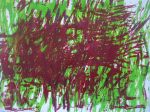
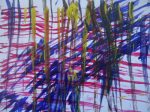
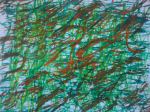
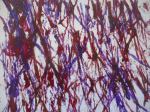
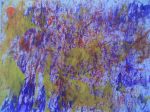
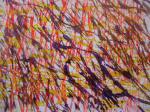
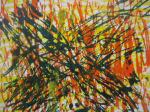
With the 7 and 8 year-olds, I was able to find a balance a bit better than the other age groups. For the last few weeks, we have been working with printmaking. I found some old blush brushes in a box, so we wrapped them in yarn, painted them, and rolled them on paper to see what patterns and designs could be made. I was so excited when one student approached me after her first design and said, “I used too much paint. Can I have another piece of paper to start another one?” I could tell that they were learning, but we also produced some pretty cool prints! We wrapped up the project in the Elijah Pierce Gallery today, talking about how art is displayed and how artists title their work. So far, we have over 30 completed and titled pieces to hang in the Kids Gallery! Here are some pictures of what the students designed:

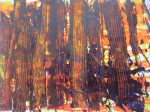
Todd Camp gave me some good ideas about teaching approaches. On Tuesday I researched the Reggio Approach, and I loved the description I found on this website: http://www.reggiokids.com/about/about_approach.php
One sentence stood out in particular to me: “At the heart of this system is the powerful image of the child. Reggio educators do not see children as empty vessels that require filling with facts. Rather they see children as full of potential, competent and capable of building their own theories.” I would like to become a teacher who is able to allow the students to do their own investigative and experiential learning, I merely want to be a guiding force in the learning process, especially in the art room! The book Young at Art by Susan Striker has a lot to say about the ways that we stifle children’s creativity. She describes how we should create projects with “very clear parameters but with complete freedom” and we should avoid “suffocating supervision” (1-10). At home, it is a lot easier to accomplish this as opposed in the classroom, but I want the classroom to be a safe environment for the children to freely express themselves.
I am certainly struggling to find the balance between structure and experimentation, process and product, planning and executing, and quality and quantity of work. Next week, and for the rest of the summer I am sure I will have more to say about that!
-Jamie
 Columbus Foundation Fellowship Programs