Site selection for the Near East Side Cooperative Market (NESCM) has forced me to flip my thinking upside down. Instinctively, the first questions I had when looking at each space were, “is this space big enough?” or “is this space nice enough?” Perhaps these questions are a function of my privileged background; I’ve always had the luxury of striving for something bigger/better/grander. However, when discussing potential spaces with the project coordinator and other board members, I realized that they were asking the polar opposite questions.
As we sat in Zanzibar coffee house after checking out a couple sites, someone piped up, “I dunno… that space seemed a little big. Will we be able to fill all those shelves?”
BIG, I thought? The place was a mere 1000 square feet!
Then someone else chimed in, “yeah, I know some other co-ops that operated successfully in 500 square feet for their first ten years of business.”
Comments like these made me realize that starting too big would ultimately make the co-op fall flat on its face. It’s better to have a small space that looks fully stocked and abundant than a large space that always appears empty. Not to mention that a smaller space means less overhead, fewer workers, and a smaller product base to keep inventory of. Once I wrapped my head around the idea that smaller was better, I got hit by another paradox.
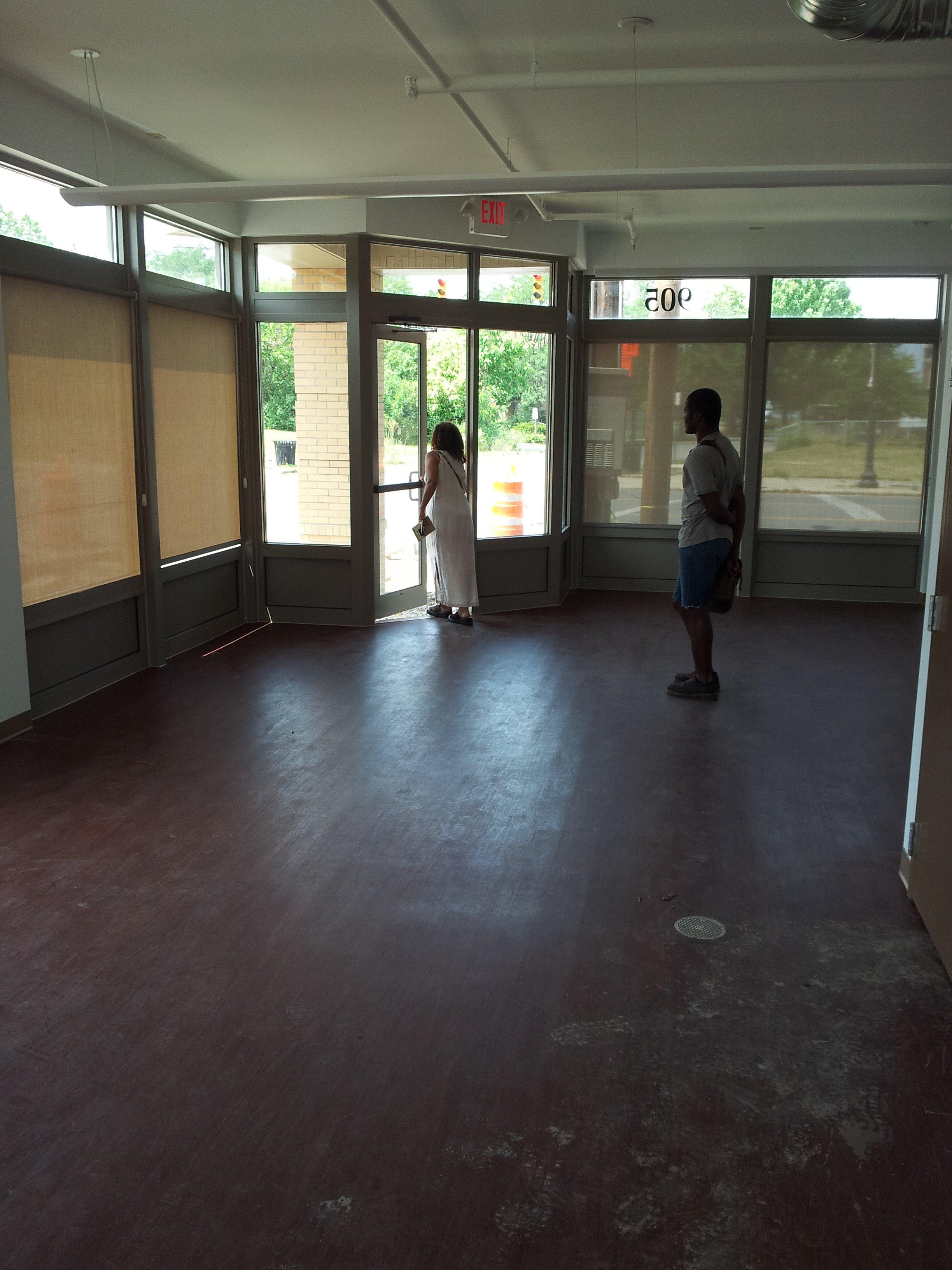
Talking about a gorgeous new space on Long Street that we had just toured (pictured above), someone said, “I’m nervous that the place is too nice; will the folks in the community think that storefront is too fancy?”
I was a little bit blindsided by that one. Wouldn’t the community be thrilled with a sparkling new storefront for the community market? After a bit more discussion I realized… maybe not. If this is meant to be a community gathering place, the community should feel comfortable there. And if the perception exists that this co-op is too corporate or too fancy, then the community may not feel at home. That would be a big mistake on our part.
I’m learning lessons along these lines on a daily basis, and I’m infinitely grateful for them. The ability to think flexibly and to view problems from all angles is at the crux of critical thinking. In the past, I’ve prided myself on my open-mindedness and ability to approach situations without assumptions. However, the longer I work with NESCM, the more I realize how far I have left to go. Sometimes my assumptions are so ingrained that I don’t even recognize they’re there. Re-training my thinking to approach every situation as a blank slate is difficult, but it will enable me to operate free of prejudice and bias, which is a virtue in nearly every circumstance.

 Columbus Foundation Fellowship Programs