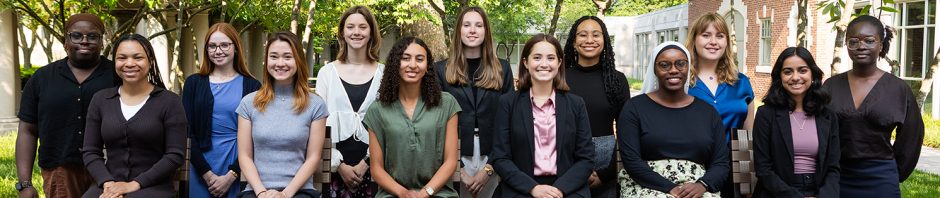
It is so hard to believe that this experience is almost over. It seems to have gone by so fast. I have learned so much, and can barely keep track of all of it… it is overwhelming in the greatest way!
The revisiting of the 1997 Ask The Land survey has gone great this summer! We have had so many different people out to the land, graciously sharing with us their expertise and passion in their fields of biology. Now that we have a better idea of what is on the land, I have been able to put together different brochures and pamphlets for people who stop by to walk around Shepherd’s Corner.
I just recently completed a brochure on wildflowers! There were actually so many wildflowers on the survey lists compiled from Dan Boone, Jenny Adkins, Mark Dilley, Jim Davidson, and Sr. Marguerite that I had to split the flowers up into two brochures; Spring Wildflowers (blooming March to May) and Summer Wildflowers (Blooming June to September). The spring wildflowers brochure emphasizes the web of life, and how the plants rely on the creatures of the Earth for seed dispersal, and those creatures rely on the plants for shelter and food.
The brochure is also fun to look at because there are some interesting random facts about some of the flowers! For example, the corm (bulb) of Jack-in-the-pulpit (Arisaema triphyllum) was used by Native Americans to create salve for injuries and joint pain! How cool is that! This not only tells about the relationship between plants and humans, but also about how long that plant has been in existence! This fascinating bit of information also brings about some serious thinking about the continued existence of plants like these. These wildflowers have been around for hundreds of years; sheltering animals, supplying nutrients into the soil for other plants, providing food for animals, or even aiding humans medicinally. It is up to us to protect our environment and the others that use it as their home.
It is so easy to disregard a problem, and place it onto the next in line… in our case, the next generation. However, we need to act now, and protect our Earth. These plants have been here much longer than us, and we have no right to think that our existence as humans is more important than theirs.
So here is a question to think about… hundreds of years from now, will people be able to walk the fruits of the earth, come across Jack-in-the-pulpit and say ,”Hey, this plant existed back during the times of Native Americans, and it still exists today!”? And if not, how can we make it so that they can?

 Columbus Foundation Fellowship Programs