Preparing for the History of the Future

Think about it. Despite all of the organizing, categorizing, and digitizing that I have done with CELC this summer, I have been working primarily with their tangible, paper-bound materials. Now think about the past 13 years. Everything that we do, more or less, is stored on computers. And I only barely scraped the surface of already-digitized documents in terms of the organizing and categorizing components. Just because digital documents take up less physical space is not a reason not to be diligent about their preservation. Moving forward, CELC still must be intentional in continuing to preserve their history and legacy in the Columbus community, especially since so much of this history is already in a digital format.

In this last week, I am asking myself questions such as, “How do I leave behind a system in which new historical items may be slotted into an existing organizational structure? And what is going to be most effective for CELC in the future?” These are questions with no simple answers. Preparing for the history of the future is no easy undertaking.

Overall, though, CELC now has digitized historical records, including everything from photos to articles of incorporation to board of trustees rosters, not to mention the VHS tapes, slides, and award plaques. I can’t be sure that I found everything (having found this week a brochure I hadn’t seen before in amongst a tub of face paint). In digitizing all of these items, CELC’s history is more accessible and can also be more effectively leveraged in marketing and fundraising campaigns, as well as grant applications. Bringing CELC’s history into the 21st century demonstrates the importance of learning from, reflecting on, and appreciating the past.

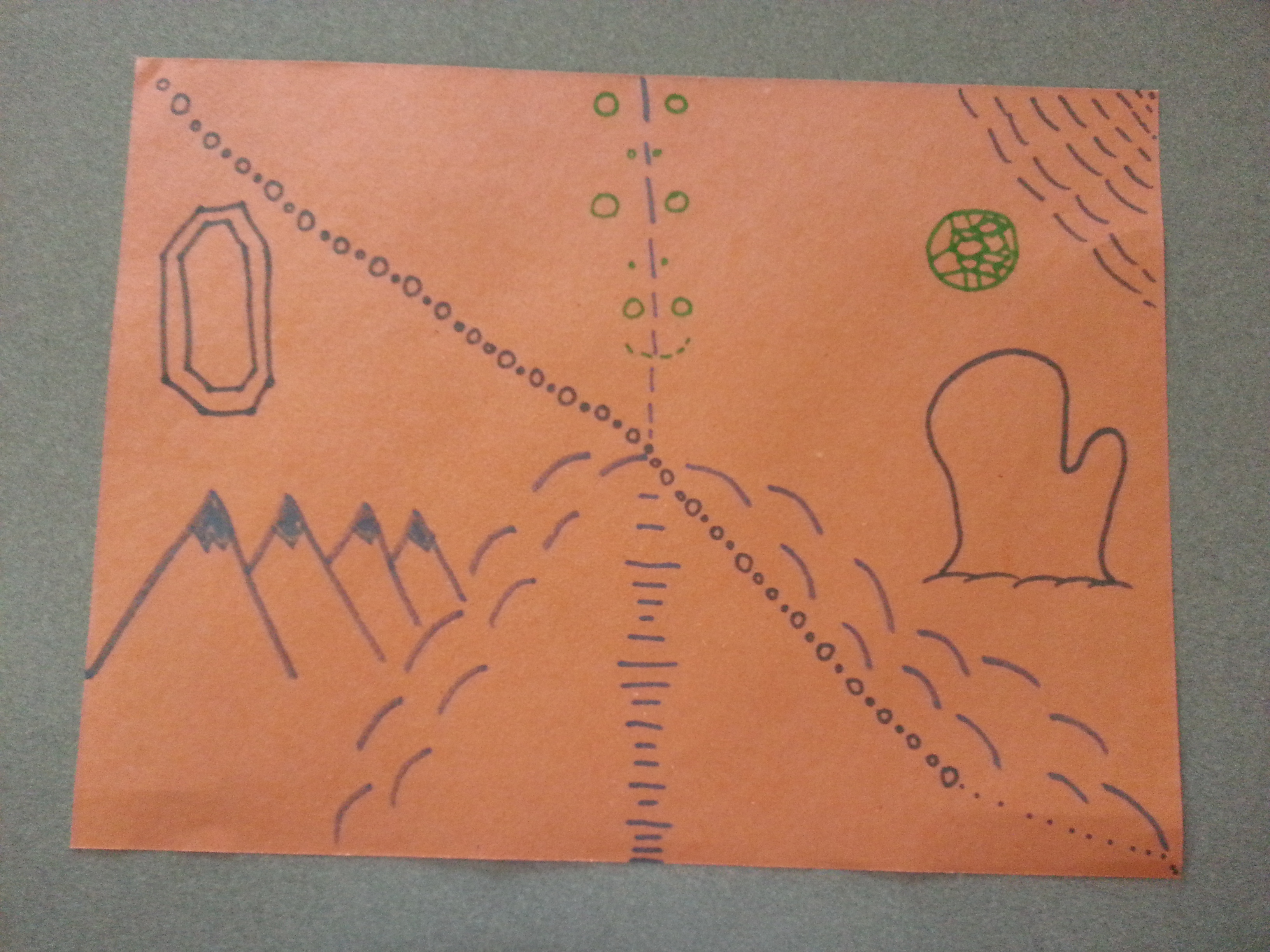
Preparing for the history of the future has already begun. Though all of this started as a treasure hunt without a map, CELC now has a digital map to locate and explore its previously hidden historical treasures.

Leave a comment

Be kind, leave notes!

Week nine of the fellowship was spent mainly distributing surveys at Lutheran Social Services, Hilltop YMCA, and Gladden Food Pantry. I enjoyed going out and meeting people living on the west side. It was a good experience for an MSW student. The residents on this side of city are pretty poor and underserved. Some individuals were completely open with me about sharing personal details of their life once they discovered I was an MSW student. The individuals visiting Lutheran Social Services were pretty open to completing a survey, and their set-up was perfect for me to have a captive audience to present my survey to. Next I went to the Hilltop YMCA to observe one of our programs called Creative Connections, and to survey parents dropping their children off at the program. That night we ended up not having a lot of families stop by, and Y was having a pretty slow night so I wasn’t able to complete many surveys. Finally I went to Gladden Food Pantry to pass out surveys which was a bit of an adventure. Residents in Franklinton have different attitudes, and I pretty much had to sell the surveys to them. This pantry operates like an assembly line so I had stay on my toes. Some people rushed so quickly by me I never had a chance to even stop them to ask if they wouldn’t mind filling out a survey for us. All in all I had 33 completed surveys which was a little over half of what I had hoped to receive. Of course before I arrived they had 16 completed surveys so I doubled the response rate. If we had decided to continue distributing the surveys sooner than we had I am confident we would have a much higher response rate. I hope the next intern continues with collecting surveys, because I found some pretty good places to distribute them.

The rest of my week was spent making an excel sheet to enter the survey data to analyze, finalizing notes for the next intern, and printing off as much information to organize into folders for the next intern as I possibly can. I am confident the next intern will be left with more information, and a better idea of what’s going on than what I feel I had. I pretty much had a folder with flyers from other organizations, handouts from other organization, copies of the 16 completed surveys, and a few piece of a paper with handwritten notes. During my fellowship I had to spend many hours learning about the culture, demographics, just exactly what was done before me, and did we hope to accomplish. This is why I am working so hard to make the next intern’s job a little easier. I’m leaving them stacks of emails I sent, several pages of notes on what was done, information on demographics, culture, excel sheet for proposed budgets for west side fall programming, survey results, completed surveys organized into labeled envelopes, and recommendations for how they should move forward.

Leave a comment

Saying goodbye to ETSS Summer Camp

Last week was an extremely busy week for me at ETSS Summer Camp. Both sites were planning an end-of-summer celebration and needed to prepare foods and supplies for the parties. Over the at East site, the kids and I worked on preparing for the celebration by cooking some of the recipes we made during camp this summer. All three age groups were able to help prepare for the party. The littlest group, ages 5-7 cut the tomatoes and cilantro for our rice and bean salad. The middle group, ages 8-10 cut the tomatoes, onions, and cilantro for our tomato salsa. The oldest group, ages 11-13 cut the cucumbers, tomatoes, red onions, parsley, and basil (from our garden!) for our pasta salad. They worked really hard to get all of the dishes ready so that we could share the recipes with their families. 

Image

The party went well and the families enjoyed the food we made! I printed out the recipes for each dish for the kids to take home, and the parents were very excited about it!

It has been a great summer, and I definitely learned a lot working at ETSS. I did not know that there was such a large Ethiopian population here in Columbus! It’s great to be able to learn new cultures and learn that there is so much more to Columbus. From my Ethiopian camper from the East site, I learned that there is a great Ethiopian restaurant in Whitehall called Lalibela Bar. I can’t wait to try it, because I sure do love injera! 

I also learned that these kids love to try new foods! They are interested in the subject of food and nutrition, and are eager to learn more. Teaching these kids has made me more confident about my future career goal as a health educator. I want to share my love of food and eating healthy to all kids and families.

There was a girl in my East site that made me so proud! She really enjoyed my nutrition class this summer and made some changes in the way she chose foods to buy at the grocery store. Her parents told me that she would tell them, “choose the whole grains” and “buy this, our teacher said this was healthy for us!” From the gardening lessons to nutrition classes, she always participated and was excited for the next class with me! I hope she continues to eat healthy!

Image

Leave a comment

Traveling to Italy for Pasta Salad!

The kids at ETSS Summer Camp have been very fortunate to be able to try so many different recipes this summer. This week, they made pasta salad as well as a Tofu Maple Syrup Dip.

The week began with the kids chopping up cucumbers and tomatoes for the pasta salad. I cooked whole grain pasta the weekend before to have the pasta ready for the kids. I always explain to the kids the importance of eating whole grains- they taste just as good as the regular “white” pasta/rice, but has SO MUCH more nutrients! The white rice/pasta removes most of the nutrients, so you’re left with just carbohydrates. Why not make the change to whole grains, a simple step to a healthier diet! To the whole grain pasta, the kids added their cucumbers and tomatoes. We also added some great northern beans for protein, and whipped up our very own dressing. The dressing is so simple to make and a healthier alternative to the dressings we normally buy at the grocery store. The dressing we made consists of olive oil, garlic powder, lemon juice, salt, and pepper. The kids had fun shaking up the container and then pouring it over the delicious pasta salad. It was great to see the kids trying the whole grain pasta, and even better to hear that they LIKED the whole grain pasta! When you mix up the whole grain pasta with delicious veggies and homemade dressing, you won’t be able to taste any difference! To pair with the pasta salad, I brought along the book Strega Nona to read to the kids. Most of the kids were familiar with the story but still enjoyed listening to the story once more.

After the pasta salad, the next cooking lesson was making the Tofu Maple Syrup Dip. At the grocery store, there are always tubs of caramel or artificial cream in the fruit section. The tofu maple syrup dip is a healthier alternative to these when we want to dip our fruits into something delicious and sweet. I brought my food processor along with me, and we combined the soft tofu, maple syrup, and cinnamon. The kids sampled the dip with sliced apples and strawberries. Most of the kids weren’t aware of how maple syrup was made, so I brought a picture book to read to them about how we make maple syrup. Making maple syrup is a long process; no wonder it’s expensive!

Image

Leave a comment

Bringing the Past into the Present

At it’s core, one might say that CELC’s mission goes beyond providing the highest quality early childhood education available. It provides a crucial service that works not only to alleviate poverty in our communities, but also to break the cycle of poverty in which so many families find themselves trapped. By making it possible for parents to work or attend school, they indirectly improve families’ socioeconomic situations.

Importantly for CELC, 125 years with a mission to provide early learning experiences as a means of improving families’ lives means that they have a lot of information about the transformation of early childhood education into its current form. Now the challenge is to craft a narrative that resonates with a variety of audiences, that serves as a testament to the the ways in which early childhood learning has changed and the ways in which it remains the same.

This week, I have been using all of the historical materials that I have scanned, photographed, and dissected over the past weeks to connect CELC’s past to its present and future. I’m no graphic designer or video editor, so I’ve had my fair share of hours spent learning how to add audio to PowerPoint (so cool that it is a feature now!). And yes, I’m using PowerPoint for all of these ventures because video software is beyond me, at least in my current time frame.

To transform these disparate objects into a useful document that brings together the past and the present has been rather exciting. I have particularly been struck by how forward thinking CELC has been over the course of its many names. At one point, as a result of searching for newspaper articles, I counted 8 different variations under which CELC has been known. While that can make it complicated to explain historical situations, having to identify which location under which name, it enriches CELC’s all-encompassing history that much more. Over the next week, I’ll continue to work to bring CELC’s history into its present initiatives.

Leave a comment

Orientation, Home visits, Recruitment and More

Image

New Desks Being Moved into a 7th grade Classroom

This past week at CCA has been very eventful! Last Saturday was our final orientation session and we had a great turn out. Nearly all of the 36 families scheduled were in attendance, which is great. We had several less faculty and staff assisting with Saturday’s orientation, but it still went smoothly. And now it is definitely a relief to have both orientations behind us.

In addition to orientation, home visits are conducted for all new students. Ms. Anstaett, West’s School Director and Mr. McClellan, West’s Dean of Students, conduct the visits as another form of introduction to CCA. One of my roles in the fellowship is to schedule and reschedule (if necessary) home visits. Right now, we have a total of 90 new students and have completed 56 home visits (62%), have 9 scheduled and 25 to still be conducted. This leaves us in a great position for home visits, especially because there will be more than 75% completed by the start of school.  

And yet again, back-to-school time is fast upon us, with less than 2 weeks before CCA’s first day on August 21st! CCA-West has seen great progress in these past few weeks in regards to both recruitment and readiness of the building. Considering that there are just 12 days until the start of the school year there is still a significant amount of work to be done. Luckily today the student desks were delivered. and now the classrooms are really starting to look like the real deal. It has been a great experience to see how far the building has come since we first moved in in early July. Are recruitment numbers are looking great and we will hopefully enroll a few more students before my time here ends. I can’t believe there is only one week left of the fellowship!

Until next week…

Nikki  

Leave a comment

Corrections focus group

Yesterday, I had the opportunity to conduct another focus group–this time with a few of the male corrections clients at one of the halfway houses. I was a little nervous when I first arrived and entered the room where the weekly “residents’ meeting” was taking place. There were a lot more people present than I expected, upwards of twenty clients. I listened in on the meeting and took notes, wondering the entire time how I was going to keep the focus group…well, focused. Luckily, a couple of the guys approached me after the meeting and asked me who I was. When I told them I was looking to talk to a couple of people about Alvis House services, they offered to sit down and talk to me before the next group of residents came in for their weekly meeting. After that was over and the next meeting began, one of the CRSs offered to round up a few more guys so that I could have feedback from a total of six clients, like I had hoped for. It was a very insightful couple of hours of my life, and I was grateful that I didn’t have to talk to all twenty clients at once!

I learned from this experience that whenever you’re nervous or apprehensive in a professional situation, it’s best to just be yourself and be as genuine as possible. Especially when the “professionalism” really just involves forming a relationship with someone, taking a deep breath and removing any kind of “job face” or fronts can often be the best way to relate to people. Granted, there are some situations which call for a sort of refining of your typical personality—for instance, I realized from various networking sessions this summer that I could probably tone down my use of the word “awesome” and substitute it with something a bit more sophisticated when I speak to people in formal settings. But when the goal is to get a client to trust you and build a relationship with you, then total sincerity—“awesome”s and all—is the best route I think.

Leave a comment

(Almost) The End of the Road

I can’t believe it’s week 8 of the Fellowship program already! Even though I began my stint at the OEC two weeks late, the knowledge I’ve amassed makes it seem like a lifetime ago. At the same time, the great people I’ve worked with and the interesting experiences I’ve had made it fly by.

     My primary assignment last week was completing an interactive map prototype version of our green jobs database, a project that my boss hopes to eventually embed in the OEC website. This was quite labor-intensive, as I spent most of my week entering addresses, cities, and zip codes into the database and testing them on the maps, a process that required much trial-and-error. The end result, after I assured the website many times that yes, that address is in Columbus, Ohio, not Columbus, Georgia, was a fully interactive map of all green jobs in the database to date. There are 300-some points, each one with additional project details contained in a pop-up tab. Although the prototype is fairly basic I was still proud to have this concrete evidence of my work, something that I know will be of interest to my co-workers and the green-minded public. Additionally, I know that having completed this step will make the next intern’s life much easier!

     Speaking of my successor, my second project last week was beginning to compile a series of how-to’s for future interns. I have worked on many projects this summer, and most of those required educating myself on various online tools and programs. In order to shorten this process for future OEC interns, I took some time to type up instructions for things like map-building websites and sharing Google account access with other OEC employees, as well as “answer keys” to OEC jargon. Although the most satisfying part of this project is knowing that I am helping future interns, laying out the systems and tools I have taught myself to use over the last 6 or so weeks also gives me a sense of pride over what I have accomplished. I can’t wait to see what the next two weeks hold!

Leave a comment

Don’t ask why…

This past week I attended a meeting at the Hilltop YMCA to discuss our ideas and plans to expand programming to west side residents by offering a fitness program at their location. Our plans are on hold, because the Y wants time to decide what the best way we should precede will be. I completely understand where the Y is coming from, but it’s still disappointing because I already had a meeting with another community partner to facilitate the fitness program. I now wish we had held off on that meeting or had her join the meeting we had last Friday.

Last week I had a lot of lessons about the art of programming. Often your plans and ideas for a program will and do change and often times you cannot afford to do what you want or need to do. I learned how to make a proposed budget for programs, by making the budget for the fall programs we planned to have. Unfortunately, we learned we cannot afford to offer programming the way we had envisioned in the Hilltop area. It was amazing to see how much programs actually cost. We offer programming at no cost to participants, but that does not mean the programs are without cost!

Aside from meetings about budgets, meeting community partners, contacting community partners, setting up visits to pass out surveys with agencies on the west side I had a few meetings with my boss to go over what I had done while she was on vacation and my plans for the upcoming weeks. Even though I won’t actually be able to implement the actual programs I have learned a lot about clinical programming. I’ve seen the good, the bad, and even the ugly side you could say. All my exposure has been beneficial especially anytime you can spend time with a LISW. Any conversation I have been able to have with my supervisor has been extremely important for my future career as a social worker. The knowledge, experience, and wisdom an LISW can share with one can be tremendously valuable.

 Just last week during our weekly supervision meeting, she told us we should never allow ourselves to go down the “why” question route, because it will only spiral you down to a deep dark place, and you may never find an answer. We should instead ask how or what questions to find meaning and to move beyond the situation that is troubling us.  

Leave a comment

Tell a story

There are stories all around us.  Some are blatantly obvious, as the media bombards our attention with endless noise.  Others are barely a blip on the radar, yet no less compelling.

Stories are the impetus of action.  We cannot help to feel a sense of urgency after experiencing a story with which we identify with in some way.

The non-profit world is based entirely on stories.  All of our organizations are working with an ongoing narrative with extensive character development, countless plot twists, and incredible conclusions.  This is why individuals give- we all want to be part of a great story.

I have learned that when it comes to fundraising- the story is the most important component.  You can provide a well-organized project summary and an immaculate budget overview, but if you cannot tell a compelling story, none of the aforementioned matters.

At INCREASE CDC, I have never been surrounded by so many compelling narratives.  The clients we serve and the staff themselves create a powerful account based on helping people achieve their entrepreneurial dreams.

Sometimes our own stories are not as obvious as others, yet they are no less compelling.  Integrating your own experiences into the greater narrative of an organization or community helps shape the plot and ultimately the conclusion. 

Our combined stories create the impetus that drives others to give.

Tune in next week for the thrilling conclusion to all of our summer narratives.

Leave a comment