One staff meeting just changed my outlook on my entire day.

It was Monday. It was raining. I was sipping my tea and working on my lesson plans about timelines and maps. It was not a bad morning. It was not a fantastic morning. It was just a rainy Monday morning.

Then I went to our weekly staff meeting.

Our president, Mike Davis and our BizTown director, Pete Crozier just returned from a week long Junior Achievement USA conference. The bulk of meeting was a debrief of what they had brought back from that experience.

The conversation was surrounding marketing and effectively communicating the organization to someone from the outside. Leave it to me to turn it into a professional development experience.

For those who have not met me: I am an outgoing person. I love to chat and I love to learn about other people’s lives. Recently though, one of my own personal growth goals has been to learn how to communicate more effectively. By that I mean, ensuring that my point is communicated as clearly and as concisely as possible. While I can talk your ear off – I would love to maximize the effect that my words have.

During this meeting, we talked about how important it is to communicate what and who Junior Achievement is in a way that is understandable and memorable. We discussed the difference between telling someone why we care about what Junior Achievement versus saying what Junior Achievement does. Both statements may be true, but explaining to someone why we care about something is going to come off much more genuine.

What’s awesome is that I can apply this technique in any area of my life and work to become a more effective and authentic communicator.

Let me practice:

Why do I care about Junior Achievement? Because this organization inspires youth to “own their future” and gives them the tools to become career ready, no matter what career path they choose.

What is so awesome, this realization was Junior Achievement in action. I acquired a tool that I will be able to take into my future career, whatever it is.

Thank you, Junior Achievement, for working your magic on me – even if I am a little bit older than your ordinary student.
Posted on by Sarah Kenny | Leave a comment

Talkin’ ’bout my generation

The past week was another whirlwind of meetings and research. After attending the orientation sessions last month for new hires in the halfway houses, I decided to inquire about attending a few sessions this month for new DD hires. The fact of the matter is that you can read and research and discuss issues from your armchair as much as you like, but in fields like corrections and DD services, you need hands-on experience to really get it. Hearing about day-to-day routines, typical challenges, and descriptions of some of the clients’ personalities really helps to close the gaps in the research.

Something that I noticed from attending the orientation sessions is the age of many Alvis House employees. There are a lot of young people, around the same age as me or even younger, entering the corrections and DD services sector. The CRS (Corrections and Rehabilitation Specialist) and HS (Habilitation Specialist) positions clearly require very mature, dedicated, and intelligent individuals, and despite the young age of many of the new hires, their enthusiasm and passion for their work more than compensated for their age. I have a deep respect for all of them!

My generation gets another gold star for being awesome philanthropists. As I was researching philanthropic trends, I was led to an article from the Association of Fundraising Professionals (AFP) Canada Council that discussed how milennials have become a vital group for nonprofits to target. The typical impression of young people is that they are not dedicated and do not have money to give, and so they are often ignored. But a 2008 survey found that 60% of teenagers made financial donations or volunteered time to charities. Research has also shown that individuals who become donors or volunteers at a young age are much more likely to stay involved throughout their lifetime. The moral of the story? Milennials are a force to be reckoned with and are capable of amazing philanthropic achievements. My generation, baby.


Source: Little, T. (2013, May 28). When it comes to giving, Canada’s youth are leaders of tomorrow–and today. AFP’s the future of philanthropy.

1 Comment

A Brief (and Interesting!) History Lesson

Image


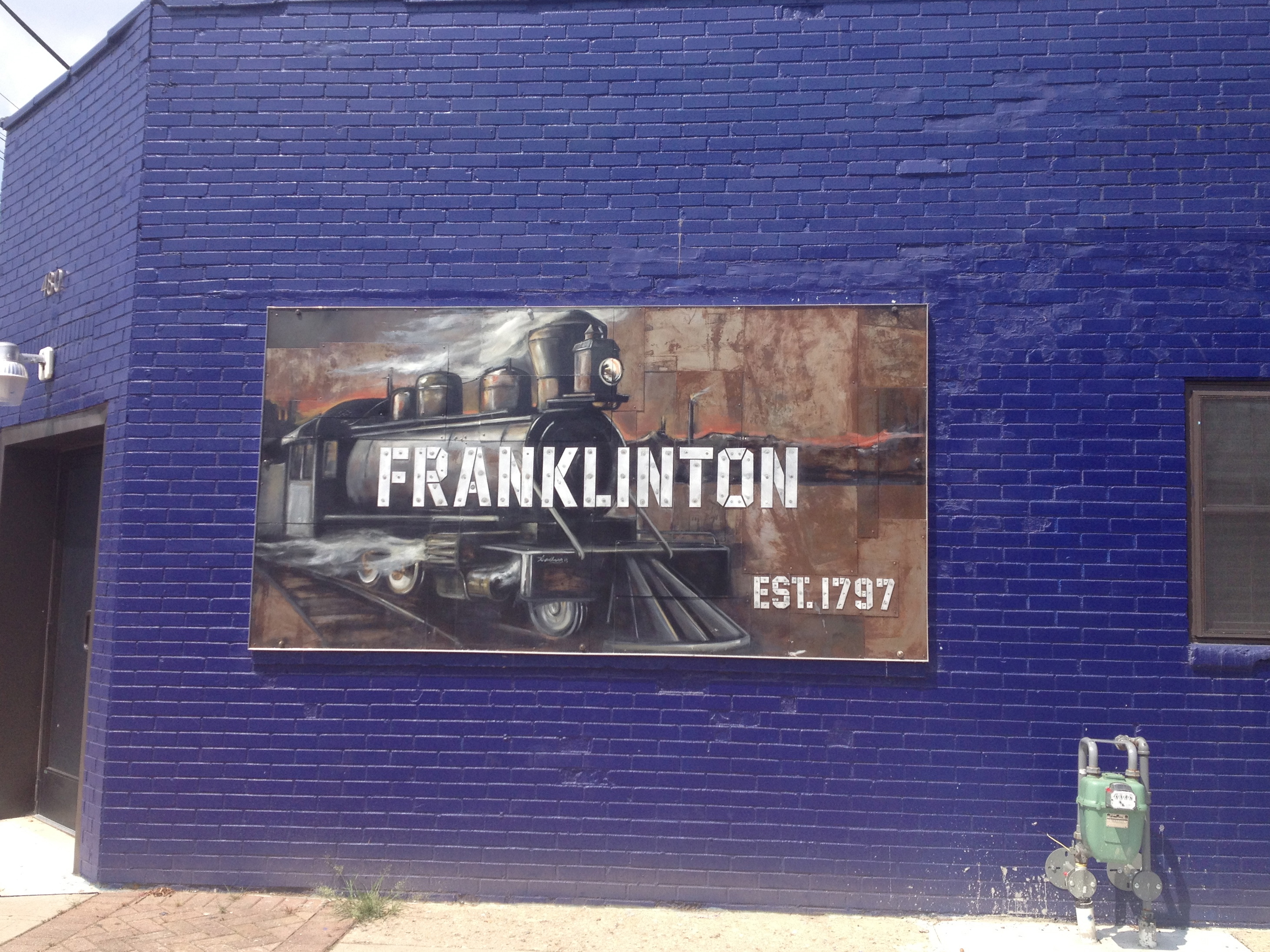
Columbus Collegiate Academy- West is located in the heart of Franklinton, Columbus. As part of my targeted recruiting and enrolling of students in the area, I have become more and more familiar with Franklinton and the history behind Columbus’ oldest neighborhood.    


Franklinton was founded by Louis Sullivant in 1797 and named the area after Ben Franklin, whom Sullivant greatly admired. (I bet you didn’t know the name Franklin County was inspired by Ben Franklin?! And another fun fact Sullivant is the name of a major street on the west side and Louis Sullivant’s wives, Sarah Starling, along with her brother, are the namesake behind Starling Middle and High School in Franklinton). In 1812, the Ohio General Assembly wanted to permanently place Ohio’s capital in the center of the state. They chose the area just east of Franklinton on the “higher ground” of the Scioto river. The decision to place Columbus just west of Franklinton over the Scioto River was a result of several floods Franklinton had seen since its inception; a decision that evidently served the capital city well in the future.


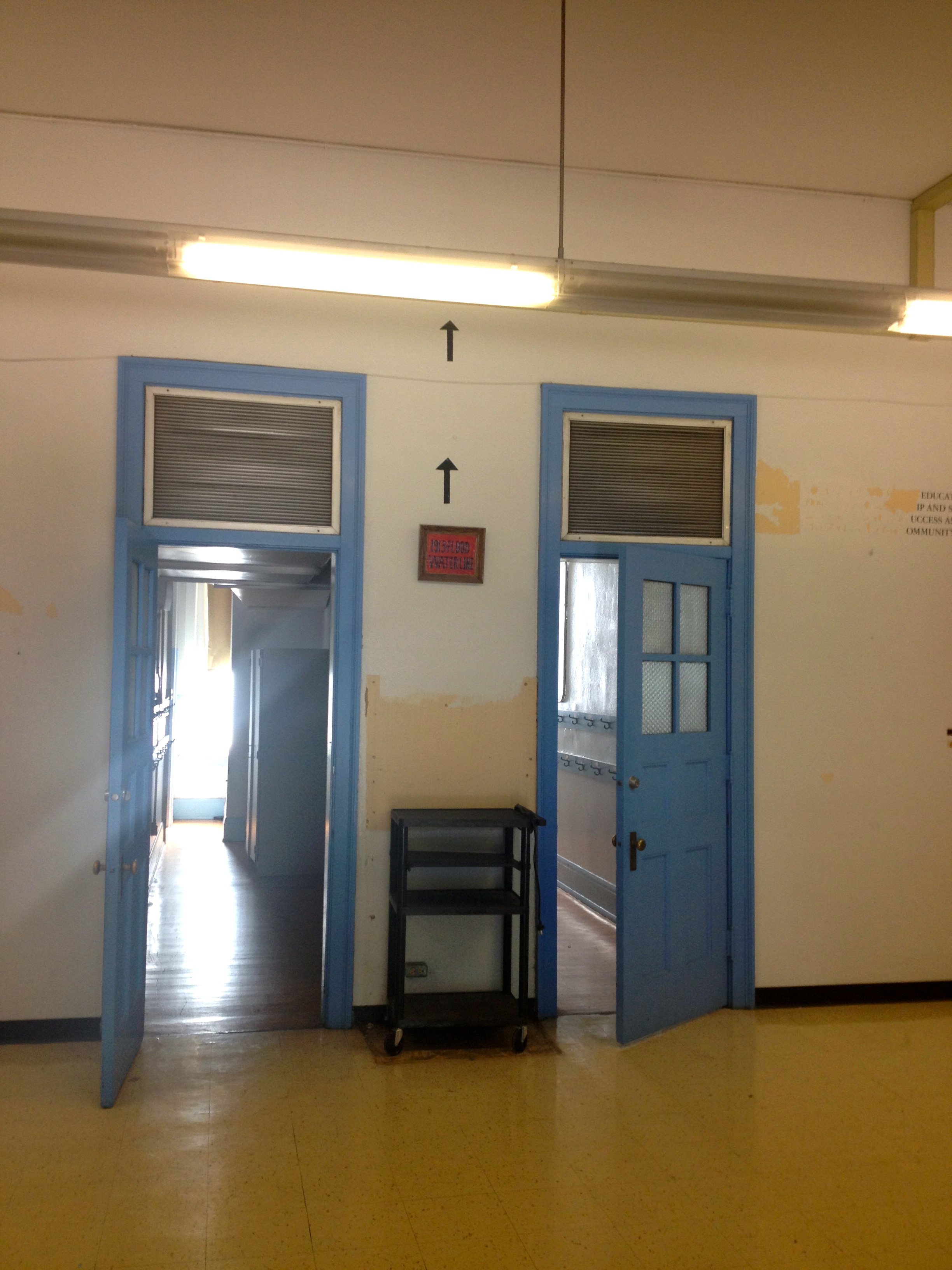
Franklinton is infamous for its low ground and tendency to flood; and consequently is referred by many of “The Bottoms” (for both its geographic location and socioeconomic status). Franklinton was seriously damaged in 1913 after the levees of the Scioto broke and poured 9 to 17 feet deep through the neighborhood. The building CCA-West recently moved into a school that was built in 1912. On the second floor of the school there is a sign showing where the water level was at the time of the flood. The flood of 1913 not only affected Franklinton, but many other parts of Ohio and to date is considered Ohio’s greatest weather disaster. In Franklinton, over 90 people were killed and 20,000 left homeless.

Image

Arrows pointing to the water levels on the second floor of Dana Ave Elementary during the 1913 flood.


After the flood of 1913, Franklinton significantly struggled to rebuild the area. In 2004, a $134 million floodwall was complete. It took more than 90 years for the city of Columbus to build a secure floodwall in Franklinton. Flood problems, in combination with interstate highway construction, led to lower property values and an influx of low-income families throughout the 20th Century. Until 2004 there hadn’t been a new structure or home built in over 80 years (mostly due to a city ordinance that restricted building in the floodplain). Today there are no building restrictions in Franklinton and the area has seen some growth and there is buzz of gentrification beginning to happen. But still, the demographics and poverty level in Franklinton remains startling. It’s continually reported as the poorest, most underserved community in Columbus and was cited in US News and World Report as one of the largest white slums in the U.S. Franklinton has a rich and complex history and will mostly likely see some revitalization in the future, hopefully affecting the local populations for the better.


Leave a comment

Half Way Point

 It’s hard to believe it’s already the halfway point for the summer fellowship. The work flow is beginning to return to normal, so everyone at Cancer Support Community is starting to get back to their normal jobs instead of unpacking and moving things around. The building is pretty much finished and nearly everything is put away. Programs resumed at the new location on Monday July 15th, which was the first day we really had participants in our new building. Everyone had only positive things to say about the building. I’ve started having meetings with community partners to expand the west side program.

The first meeting I attended was with the YMCA of Central Ohio, where I met with the director of government funding and diabetes program, and the LiveStrong program director. The meeting went really well, and the LiveStrong program sounds like an excellent program which the YMCA takes very seriously. They have put a lot of work into making sure this program is done correctly. The LiveStrong program is a free, twelve-week fitness program for cancer survivors, and their families are given twelve weeks’ free membership as well. They are very interested in teaming up with CSC_CO now that they are beginning to expand the LiveStrong program to other Central Ohio YMCAs. I believe this partnership could be a very positive relationship in the long term when it comes to ensuring that no one faces cancer alone.

The second meeting I attended was with Gladden Community House and MovNat. The Gladden Community House has existed for over a hundred years doing community work on the west side of Columbus. They do all sorts of community work, and I find it amazing that they have been around for that long! One thing I do know about the west side is that they have strong community organizations working to improve the lives of west side residents. MovNat is a physical education system that also uses a full range of real-world, natural human movement skills. Basically, they teach you how to be physically active in any type of setting, and they have a nutritional element as well.

Both meetings were successful, and it looks like we will have a family cooking class and a teen fitness class on the west side in early September. Unfortunately, the building move cut into our time to focus on program expansion, so I will not be able to see the programs actually being implemented. I will be handing it over to the next OSU social work intern, who will arrive a few days after my departure. I think the programs will happen, and after I leave, the transition to the new intern will be a lot smoother than it felt like it was for me. When I arrived at CSC_CO, it had been more than a month since the last intern had left, so I was more than lost and confused as to what she had done and where I should pick up. I plan to leave more detailed notes for the next intern to ensure this expansion is successful.


Leave a comment

Nuggets of Marketing Gold

Over the past five weeks, I have sifted through a lot of paperwork, photos, and newspaper clippings on a search for gold nuggets of CELC’s history. Fortunately for me as the prospector, my search thus far has yielded some excellent bits of treasure.

This week I have changed focus slightly to begin to think about possible marketing and branding strategies that translate these historical gold nuggets into a compelling, cohesive, and resonant narrative that capitalizes on CELC’s 125 year history at the forefront of early childhood education. After all, they were the first day nursery in Ohio and the 17th in the nation. The day nursery here in Columbus existed before 12 states had joined the union. CELC has been around longer than Arizona, South Dakota, and Idaho have been states. To me, that really puts it all in perspective. 

It’s exciting and illuminating to bring CELC’s forgotten accomplishments to the forefront again in a way that it useful to the current organization. All of the history provides an excellent opportunity to examine key themes that continue to underlie CELC’s work in early childhood education. As early childhood education again enters the national political education conversation, bringing their history to bear on that conversation and to influence it will be most useful. As CELC works to incorporate intergenerational programming into their curriculum, for example, they can articulate that the North Side Center had the largest Foster Grandparent program in its sector and also served as a host site for the Retired Senior Volunteer Program (RSVP). We even have a few excellent photos and newspapers clippings that illustrate senior citizens’ involvement with the child development centers. It’s marketing gold – CELC’s history strengthens the resonance of its current initiatives and activities.

Leave a comment

Rolling in Responses

“What gets measured gets done.”  We have all heard this adage before, yet these words never truly resonated with me until this summer project.

Like many of my fellow colleagues, I have been collecting data for several weeks.  I am using a survey to extract information regarding the entrepreneurial experiences of our clients. 

Data collection is a delicate process.  Little did I know that a simple survey would push me to conduct extensive research on targeting audiences, develop creative marketing solutions, and most surprising of all- actually use things from my statistics course. 

Unfortunately, I do not have the luxury of having hundreds of Psychology 101 students trying to fulfill their class research participation requirement funneling into my office.  The process takes patience and a willingness to change your entire approach multiple times in order to get those valuable responses you seek.

The feedback we have received so far has given us a unique look at microenterprise.  I have gained a new respect for data measurement.  We are all trying to improve in some way or another in our lives.  Data gives us an opportunity to understand our baselines, set goals, and follow through to make positive change.  Each response allows us to make our programs and support resources that much better.  The process can be challenging, but once you hit your goal- it all becomes worthwhile.

Leave a comment

Last week at the OEC was full of excitement, with the highlight being a mad dash to the Athenaeum, which my boss is considering as a venue for a future OEC event. This field trip opportunity popped up unexpectedly and, naturally, nothing happened the way it was supposed to.

First, the other intern I rode with and I both realized shortly after beginning our drive that neither of us had remembered our wallets on the way out the door, and thus had exactly zero money for downtown parking. “Hey, that’s okay,” we reassured each other, “we can probably find somewhere to park for free!” Of course, since we were trying to park in downtown Columbus, that was not the case, and (spoiler alert) we ended up having to borrow money from our boss.

Upon exiting the parking garage, we quickly realized that we were much farther from the Athenaeum than anticipated. What followed was a sprint down Gay Street, which I’m sure entertained passersby forced to dart of the way of two young women in full professional garb.

Once we finally reached our destination, we burst triumphantly through the front doors, startling the woman and the front desk and disrupting the quiet calm inside. “Hi…we’re with…the OEC tour?” the other intern gasped. Thankfully, the rest of our group was just an elevator ride away. We did a slow lap of the room to catch our breath, and listened to the tour guide spout facts about the facility’s Freemason history. Our boss asked a few questions, took a few pictures, and then…everyone shook hands and the tour ended. Approximately ten minutes after we had flung open the Athenaeum’s doors, we found ourselves on our (long) way back to our car.

This situation was certainly high-stress at the time, but looking back on it now I laugh at the memory of the way we skidded around street corners and sprinted along crosswalks, and (more importantly) I’ve now learned the importance of always being prepared. Life here at the OEC is a fast-paced one, and I will certainly never take that for granted (or forget my wallet) again.

Posted on by hannahbrevoort | Leave a comment

Keeping it Cool

It’s been a scorching week in Columbus, and people and animals alike are feeling the heat. LifeCare Alliance partners with The Columbus Division of Fire and fire departments in Marion and Madison counties to help our clients and community members ‘Beat the Heat.’

The Beat the Heat Fan drive began back in June and is still going strong. Fans are collected and distributed daily to ensure that individuals at risk of heat stroke or heat exhaustion are kept cool. With temperatures climbing above 90 degrees this week, these donated fans are literally the difference between life and death. This week alone, LifeCare has donated over 700 fans to people in need. Since the Fan Campaign’s creation over a decade ago, LifeCare has distributed over 15,000 fans.

Keep an eye out for homebound individuals and older adults in your neighborhood. Symptoms of heat exhaustion and heat stroke include:

Heat exhaustion                           Heat Stroke       

Heavy sweating                                 No sweating

Paleness                                              Red, hot, dry skin

Muscle cramps                                   Muscle cramps

Headache                                            Body temperature of 103+

Queasiness                                          Nausea, vomiting

Dizziness                                              Dizziness

If you think a person is suffering from heat exhaustion or a heat stroke, call 9-1-1 immediately! Then offer the person a cool drink (non-alcoholic) and a cool washcloth placed on their forehead, back of the neck, and/or wrists.

photo (3)

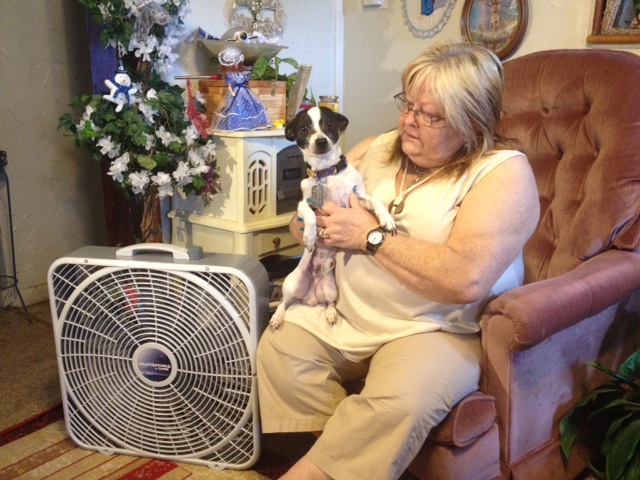
Linda Collins and Oreo enjoy their new fan

Linda Collins and her dog, Oreo, are a great example of how a fan donation can benefit an entire household. (Can you imagine being a dog with all that fur in this heat?) When the pair received their fan, they also learned of the Pet Care Program. Collins and Oreo have been included on our revamped Animeals routes and will begin to receive dog food deliveries shortly.

If you or someone you know is in need of a fan, please call the Fan Campaign Hotline of LifeCare Alliance at 614-437-2870.

For more information about the Fan Campaign, check out http://www.lifecarealliance.org/index.php?option=com_content&view=article&id=175&Itemid=13

Leave a comment

Making the Numbers Talk

As I near the end of the data collection phase of my research project, I find myself staring at some intimidating spreadsheets.  I created them, and yet I can relate to the bewilderment of Dr. Frankenstein upon the completion of his monster.

The next step is to analyze the numbers and translate them into English.  This process is relatively unknown to me (I make no claims of being a statistician).  Not only do I need the answers to certain questions from the data, but I need to determine what those questions are.

This week the Summer Fellows had their second Learning Session of the summer with Michelle Vander Stouw, an expert in strategic planning for non-profit organizations.  Part of her presentation focused on the importance of data and research for defining the conditions and environment of a nonprofit’s work.  I found this particularly relevant to my present conundrum.  The advice she gave was that the data should tell a story, a concept I have often heard mentioned.

But now I realize this is no amateur feat.  Right now it feels more like I am interrogating the data; trying to make it talk.

Happily, Michelle provided a few places to start in order to frame this data narrative, so I am not without ideas. Consider, who is your audience? What is your message? What kind of data will be useful?

Ultimately, I know that these are the questions I need to answer in the final report. However, I don’t think I can coerce my spreadsheets into this level of cooperation just yet. Right now I am starting with the basics, asking them simple questions.  “What is the average of these numbers?” “Are there outliers?”  “What is the total?”  My hope is that if we proceed slowly, the numbers will start to talk. And eventually, once they’ve warmed up to me, maybe then they will tell their story.

Leave a comment

Hitting Our Stride

Part of the Hilliard Free Lunch Summer Camp for Kids 4th of July Parade Float
12 nationalities represented at just one of our three camp sites!

It’s official.  Summer Camp is in full swing.  With this comes a lot of driving.  Driving between the three Summer Lunch sites, the SON Ministries office, our partnering churches and various businesses throughout Hilliard has brought me to appreciate my old, green pickup truck in a way that would make any country music artist proud.  I even had the opportunity to take my truck for a cruise around Hilliard in this year’s 4th of July Parade.

I spent the week prior to the parade working with the kids to make decorations for my  truck, coordinating with the city to sign up for the parade, collecting 55 pounds of candy and printing over 1,000 fantastically colorful flyers.  It was my first time really getting a chance to experience the larger community of Hilliard and I thought I was pretty prepared for it.

The community turned out in force.

Two miles of side streets absolutely packed with people.  1,000 flyers and enough candy to feed a small army later… we were almost to the end of the parade.

The festivities on the fourth shortened one of the precious nine weeks we have to spend with our kids, so when we came back the following Monday, we hit the ground running.

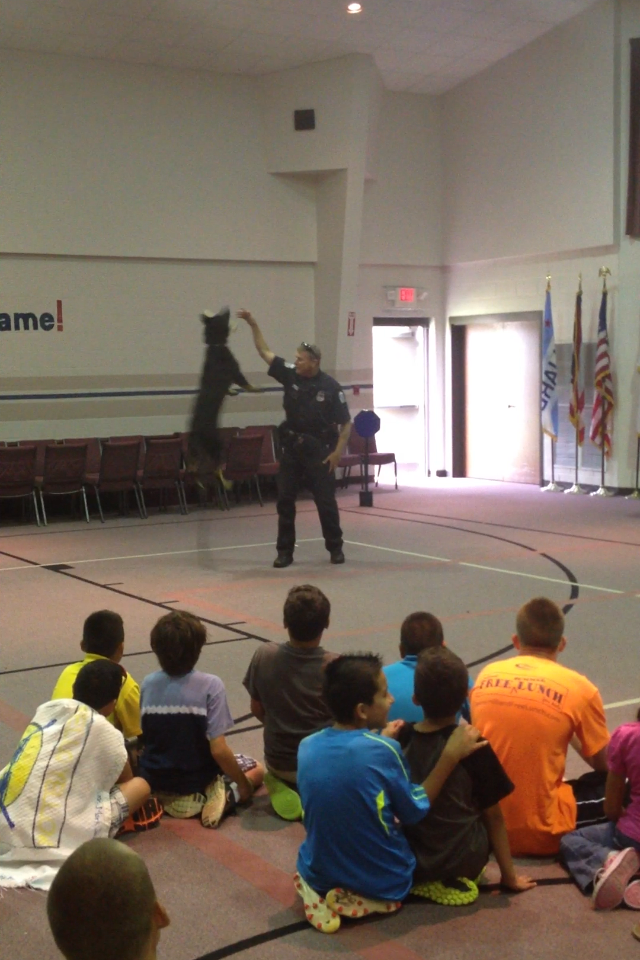
The phone calls and emails I’d been making, along with support from the rest of our staff, started to pay off in the form of Special Guest visits.  Last week we had a police officer from the K-9 unit and his dog visit all three of our sites!

Officer Rogers and his dog, Lucky, showing off for the kids.

This week holds more even more guests.  KidSMILES will be making an appearance for a hygiene presentation on Friday, in addition to an ICU doctor!

Today, we packed up 100+ of our closest friends (between the grades of kindergarten and sixth grade) and took a field trip to the Franklin County Fairgrounds for their “Fun & Learn” program.  We made robots out of toothbrushes, met Pedro the Donkey and toured the 4-H booths and the Historical Village.

Stayin’ cool in some shades at the Franklin County Fairgrounds


New soccer goals requested, designed and constructed by some of our kids!

On top of the special guests and field trips and parades, we have some projects in the works also.  Thanks to Home Depot and their donation of more PVC pipe than any one person should ever need, our kids designed and constructed new, improved soccer goals!  This week we’re working on painting the goals and attaching the nets all in preparation for…

Family Night!

Our two larger sites are inviting friends and family of the kids in our camp, as well as our volunteers and staff, to visit our camp “after hours”.  The majority of our kids are picked up and dropped off every day by bus and we rarely get to interact with any of their families.  This is an opportunity to change that.

We’ve been working over the past few weeks to include exhibition soccer and dodgeball games, a halftime show headlined by our dance team, refreshments provided by our baking team, an art gallery and a talent show!  Are you ready for my favorite part?  All of these aspects of our family night are completely child run.  We’ll provide some food and opportunities for the families to get connected to local resources, but the kids do all the rest.

Oh yeah, we also run four hours of programming at three different sites and provide a free and nutritious breakfast and lunch to 200 kids five-days a week.  It’s sometimes easy to get caught up in the day to day details and miss the bigger picture of what I get to be a part of here.  When you step back, it’s pretty amazing.

Leave a comment