Ode to Planning

We are in week seven of our summer fellowships. Crazy.

There is much to be done to complete the research I am doing at the Women’s Fund, and the thought “three weeks left” is… startling.  But I am on track to complete my project at the end of three weeks, as planned.

Sitting here in week seven, writing this post, it is comforting to have that plan laid out.  There will be no stressful, college-finals-week scramble to get it done.  Having a plan to complete the report provides the assurance that it will get done.

This summer has taught me a lot about the value of setting achievable and measurable goals.  In the first weeks of my internship, the goals I outlined for the summer were too broad.  I found that my work day-to-day was scattered and at the end of the day I could not measure the progress I had made.  Ten weeks seemed like a lot of time, but developing and conducting a research project from start to finish is a complex task.

So, thanks to a bit of advice from co-workers (and my mother, she’s the best), I restructured my goals along a detailed week-by-week timeline.  I made a heading for each of the nine weeks that were left. And under each heading I made a list of tasks that I needed to accomplish that week in order to get to the final product: “Turn in final copy to Beth.”

This tool has been much more useful.  It has allowed me to focus on one task at a time, and to see the progress I make each day.  I have learned that, when working on a ten-week project, it is necessary to have one week projects to accomplish along the way.

Plus, with this timeline, I get the satisfaction of crossing things off the list every day.  So for the rest of week seven (and eight and nine) I will keep chipping away at the bulk of the final product until August 16th which says “Say farewell to friends at WFCO and present project at TCF.”  I know if I stay on track, my report will be ready, and so will I.
Leave a comment

It’s so hard to believe I’m nearly finished with the six week of the summer fellowships! I have a meeting schedule next week to discuss having a teen fitness, and adult strength training program in the fall on the west side. I’m also going to tour Gladden Community House’s summer program at some point next week. I’m looking forward to actually having a tour of Gladden Community House (settlement house, located in Franklinton), because I worked on a presentation this past spring semester that featured Gladden. My group members interviewed the director of Gladden’s food pantry, but I was unable to attend the meeting, so this will give me an opportunity to finally see how the organization operates and more about the community work they do.

This past Tuesday I was going to go to the Hilltop YMCA to pass out surveys while one of our west side programs was taking place there, but once I arrived at the Y with my box of goodie bags I quickly realized I didn’t actually have the surveys. At some point during the week I must have taken them out of the box and re-filed them away. I was so upset with myself that I had forgotten the very thing for my purpose to even be at the Hilltop YMCA. I can’t even describe in words how frustrated I was with my lack of preparedness, but as it turns out our program was cancelled, so I spoke with a few people about Cancer Support Community, passed out a few goodie bags. Luckily I can go to the program next month to pass out surveys and goodie bags. Everything always works out in the end.

Besides our move and trying to expand programming, CSC has also had to implement a new distress tool called CancerSupportSourceTM. By 2015 there will be a federal mandate requiring any agency working with cancer patients to conduct a distress screening on the person with cancer. Putting the tool into practice has meant a lot of changes have had to be made in long held procedures. It’s been interesting to be a part of the “committee” to bring about these changes. I will admit I haven’t had much input, but I have been a part of several meetings to figure out how to handle walk-ins and calls for the front desk. No matter how much you plan for new procedures things will arise that cause you to go back to the drawing board. It’s important to know that all plans should be flexible. As an outsider I’ve had the opportunity to hear how the front desk workers feel about these changes, and I’ve also heard how the clinical staff feels about the changes. We haven’t always been quite on the same page. From all my observations I realized how important it is for social workers to advocate for our profession.

Image

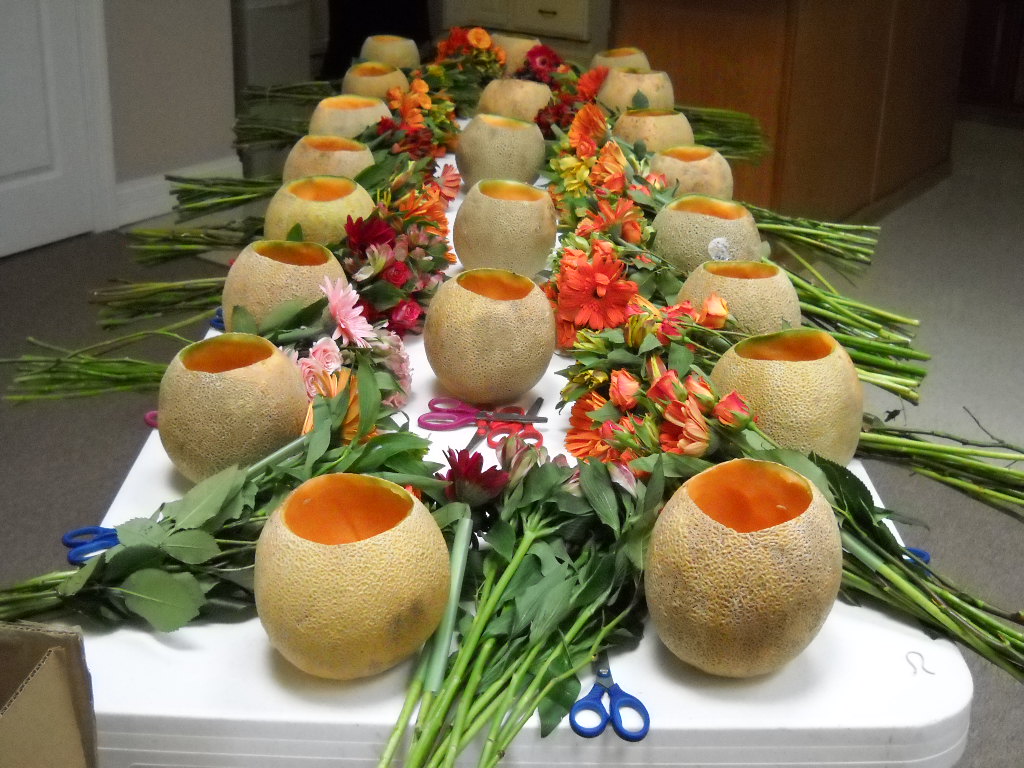
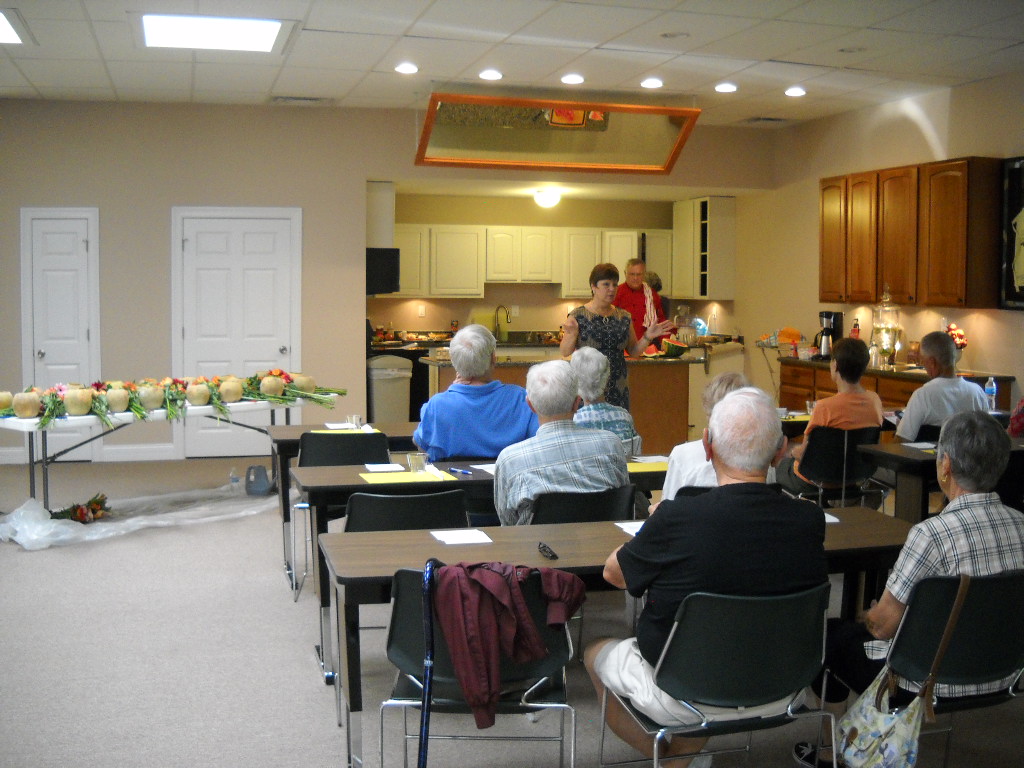
It was so nice for programming to resume this past week. It just made this week feel like a normal work week, and there were no longer any construction workers around. I had the opportunity to attend the Qi gong class which was interesting. I’ve never even heard of Qi gong or seen it practiced so this was a completely new experience for me. I also had the opportunity to see a little bit of the cancer smart cooking class. They had a garden theme party, so we had a floral arrangement demonstration. I had so much fun making a floral arrangement, and some of the participants even put flowers in my hair. I definitely left with a smile on my face and an arm full of flowers that night. Image

Posted on by melissalester13 | Leave a comment

PowerPoint with a side of Broccoli

Every month, INCREASE CDC hosts an event for the Increase Community Business Network (ICBN).  The event allows business professionals, entrepreneurs, and community members to network and enjoy a presentation by an expert in popular business topics.

The topic of July was Profit Strategies.  Our presenter was a business consultant from ActionCoach, a global consulting firm.  I was quite excited for this presentation, as I was given the chance to look important and introduce our speaker at the luncheon.  After my exhilarating three minutes in the spotlight, I took my seat and watched a masterful presenter keep us on the edge of our seats for two hours.  She took a dry topic, made is very engaging, highly energetic, and informative.

Now- I am part of the generation that has grown up with PowerPoint as the primary means of presenting information.  I will say that after years of sitting through presentations by “bullet-point-sentence-readers” and marveling at the wonder of corny slide transitions (ie- dissovle), chills run down my spine every time I see someone double click that ominous orange “P.”

Yet, every once and awhile, a presenter comes along that renews my faith in Microsoft’s old warhorse.  I can equate this feeling to being force-fed broccoli as a child, developing a deep aversion to the green treat, and then having a meal with the vegetable that makes your taste buds scream for more.

Needless to say, she was great.

Not only did I learn about maximizing profit in various revenue streams to entertain my entrepreneurial hoop dreams, but I also witnessed how to effectively engage an audience.

Sometimes all it takes is a creative person to show you how great “broccoli” can be.

/dissolve

Leave a comment

One staff meeting just changed my outlook on my entire day.

It was Monday. It was raining. I was sipping my tea and working on my lesson plans about timelines and maps. It was not a bad morning. It was not a fantastic morning. It was just a rainy Monday morning.

Then I went to our weekly staff meeting.

Our president, Mike Davis and our BizTown director, Pete Crozier just returned from a week long Junior Achievement USA conference. The bulk of meeting was a debrief of what they had brought back from that experience.

The conversation was surrounding marketing and effectively communicating the organization to someone from the outside. Leave it to me to turn it into a professional development experience.

For those who have not met me: I am an outgoing person. I love to chat and I love to learn about other people’s lives. Recently though, one of my own personal growth goals has been to learn how to communicate more effectively. By that I mean, ensuring that my point is communicated as clearly and as concisely as possible. While I can talk your ear off – I would love to maximize the effect that my words have.

During this meeting, we talked about how important it is to communicate what and who Junior Achievement is in a way that is understandable and memorable. We discussed the difference between telling someone why we care about what Junior Achievement versus saying what Junior Achievement does. Both statements may be true, but explaining to someone why we care about something is going to come off much more genuine.

What’s awesome is that I can apply this technique in any area of my life and work to become a more effective and authentic communicator.

Let me practice:

Why do I care about Junior Achievement? Because this organization inspires youth to “own their future” and gives them the tools to become career ready, no matter what career path they choose.

What is so awesome, this realization was Junior Achievement in action. I acquired a tool that I will be able to take into my future career, whatever it is.

Thank you, Junior Achievement, for working your magic on me – even if I am a little bit older than your ordinary student.

Posted on by Sarah Kenny | Leave a comment

Talkin’ ’bout my generation

The past week was another whirlwind of meetings and research. After attending the orientation sessions last month for new hires in the halfway houses, I decided to inquire about attending a few sessions this month for new DD hires. The fact of the matter is that you can read and research and discuss issues from your armchair as much as you like, but in fields like corrections and DD services, you need hands-on experience to really get it. Hearing about day-to-day routines, typical challenges, and descriptions of some of the clients’ personalities really helps to close the gaps in the research.

Something that I noticed from attending the orientation sessions is the age of many Alvis House employees. There are a lot of young people, around the same age as me or even younger, entering the corrections and DD services sector. The CRS (Corrections and Rehabilitation Specialist) and HS (Habilitation Specialist) positions clearly require very mature, dedicated, and intelligent individuals, and despite the young age of many of the new hires, their enthusiasm and passion for their work more than compensated for their age. I have a deep respect for all of them!

My generation gets another gold star for being awesome philanthropists. As I was researching philanthropic trends, I was led to an article from the Association of Fundraising Professionals (AFP) Canada Council that discussed how milennials have become a vital group for nonprofits to target. The typical impression of young people is that they are not dedicated and do not have money to give, and so they are often ignored. But a 2008 survey found that 60% of teenagers made financial donations or volunteered time to charities. Research has also shown that individuals who become donors or volunteers at a young age are much more likely to stay involved throughout their lifetime. The moral of the story? Milennials are a force to be reckoned with and are capable of amazing philanthropic achievements. My generation, baby.


Source: Little, T. (2013, May 28). When it comes to giving, Canada’s youth are leaders of tomorrow–and today. AFP’s the future of philanthropy.

1 Comment

A Brief (and Interesting!) History Lesson

Image


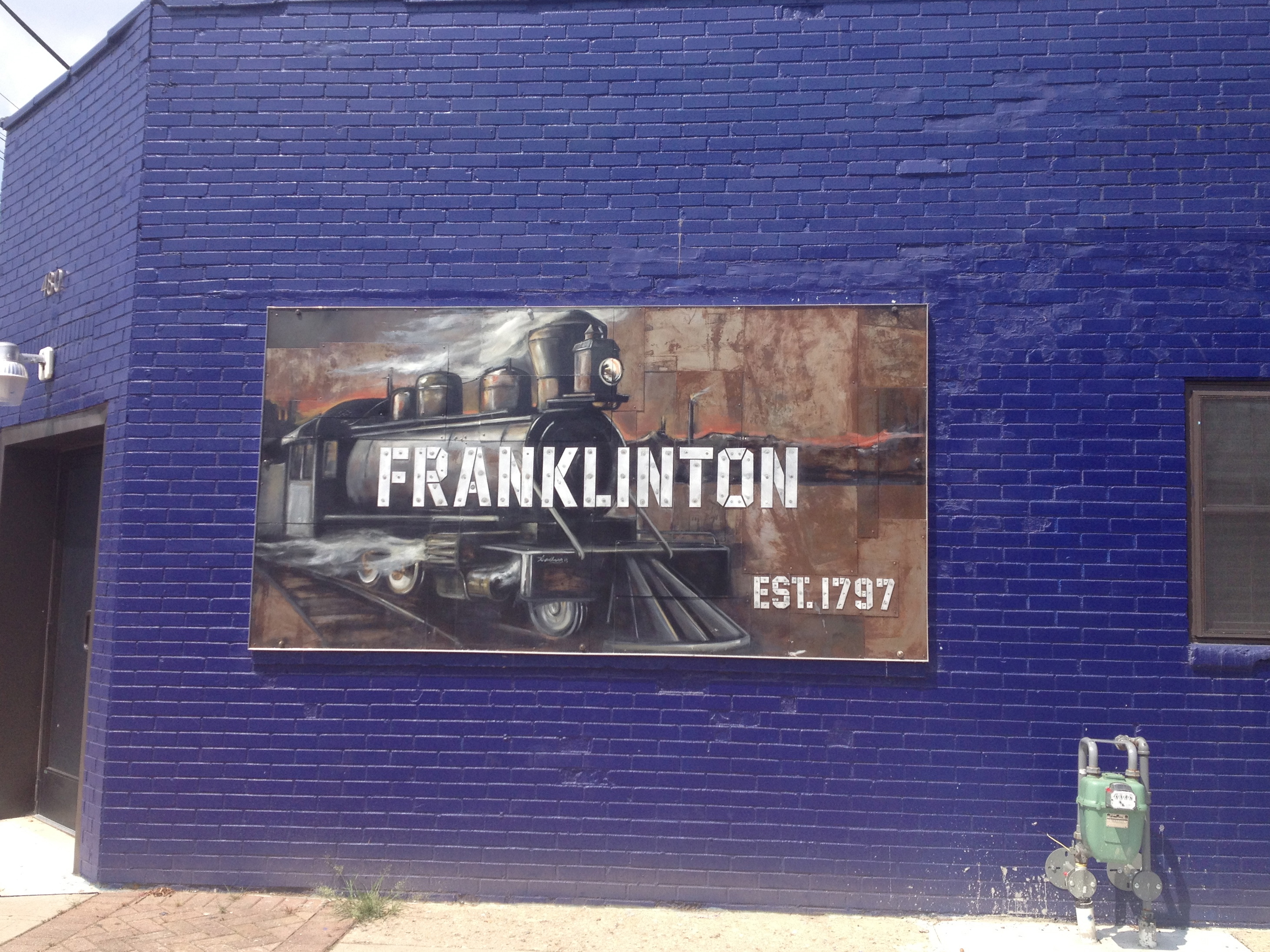
Columbus Collegiate Academy- West is located in the heart of Franklinton, Columbus. As part of my targeted recruiting and enrolling of students in the area, I have become more and more familiar with Franklinton and the history behind Columbus’ oldest neighborhood.    


Franklinton was founded by Louis Sullivant in 1797 and named the area after Ben Franklin, whom Sullivant greatly admired. (I bet you didn’t know the name Franklin County was inspired by Ben Franklin?! And another fun fact Sullivant is the name of a major street on the west side and Louis Sullivant’s wives, Sarah Starling, along with her brother, are the namesake behind Starling Middle and High School in Franklinton). In 1812, the Ohio General Assembly wanted to permanently place Ohio’s capital in the center of the state. They chose the area just east of Franklinton on the “higher ground” of the Scioto river. The decision to place Columbus just west of Franklinton over the Scioto River was a result of several floods Franklinton had seen since its inception; a decision that evidently served the capital city well in the future.


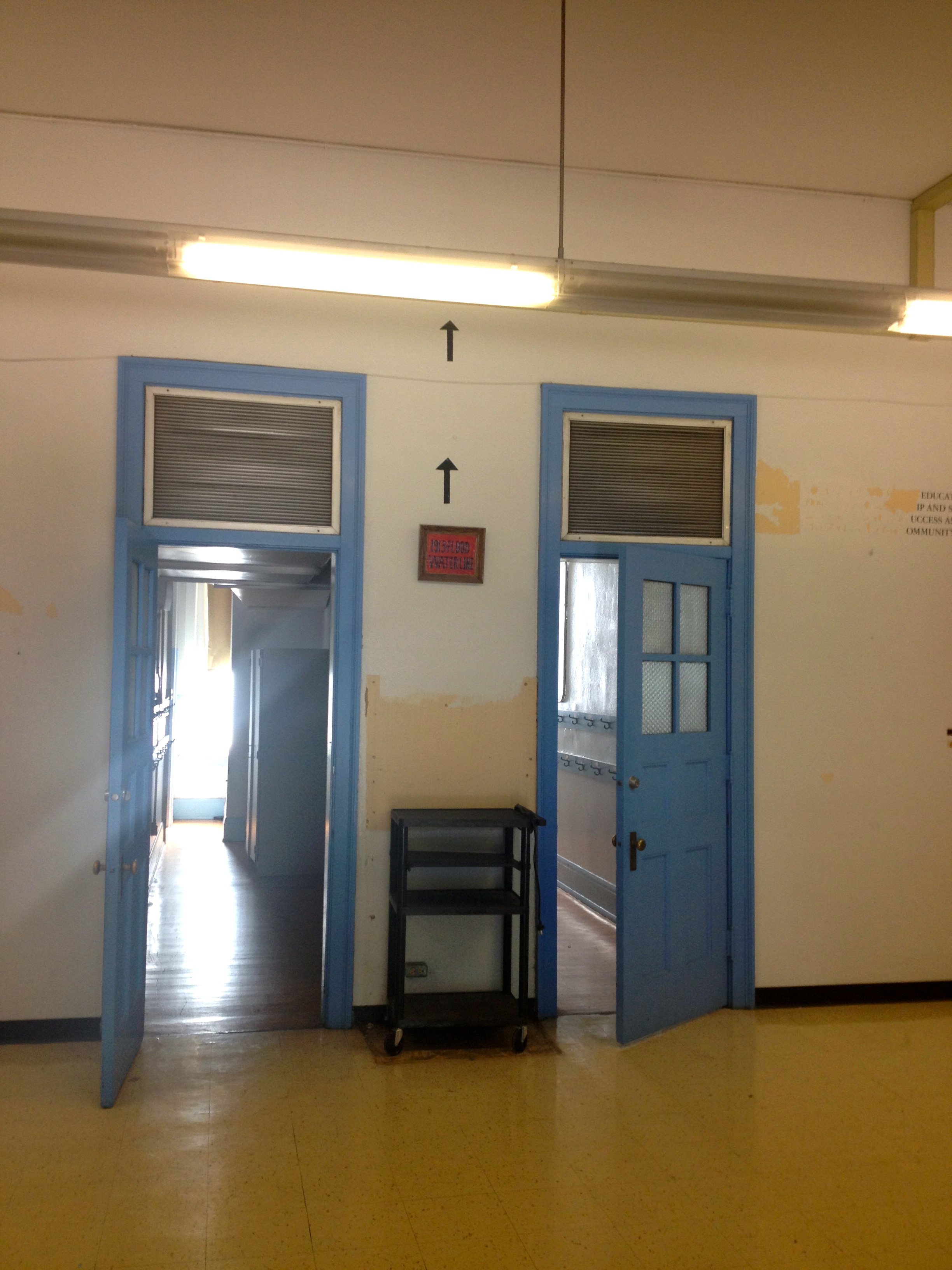
Franklinton is infamous for its low ground and tendency to flood; and consequently is referred by many of “The Bottoms” (for both its geographic location and socioeconomic status). Franklinton was seriously damaged in 1913 after the levees of the Scioto broke and poured 9 to 17 feet deep through the neighborhood. The building CCA-West recently moved into a school that was built in 1912. On the second floor of the school there is a sign showing where the water level was at the time of the flood. The flood of 1913 not only affected Franklinton, but many other parts of Ohio and to date is considered Ohio’s greatest weather disaster. In Franklinton, over 90 people were killed and 20,000 left homeless.

Image

Arrows pointing to the water levels on the second floor of Dana Ave Elementary during the 1913 flood.


After the flood of 1913, Franklinton significantly struggled to rebuild the area. In 2004, a $134 million floodwall was complete. It took more than 90 years for the city of Columbus to build a secure floodwall in Franklinton. Flood problems, in combination with interstate highway construction, led to lower property values and an influx of low-income families throughout the 20th Century. Until 2004 there hadn’t been a new structure or home built in over 80 years (mostly due to a city ordinance that restricted building in the floodplain). Today there are no building restrictions in Franklinton and the area has seen some growth and there is buzz of gentrification beginning to happen. But still, the demographics and poverty level in Franklinton remains startling. It’s continually reported as the poorest, most underserved community in Columbus and was cited in US News and World Report as one of the largest white slums in the U.S. Franklinton has a rich and complex history and will mostly likely see some revitalization in the future, hopefully affecting the local populations for the better.


Leave a comment

Half Way Point

 It’s hard to believe it’s already the halfway point for the summer fellowship. The work flow is beginning to return to normal, so everyone at Cancer Support Community is starting to get back to their normal jobs instead of unpacking and moving things around. The building is pretty much finished and nearly everything is put away. Programs resumed at the new location on Monday July 15th, which was the first day we really had participants in our new building. Everyone had only positive things to say about the building. I’ve started having meetings with community partners to expand the west side program.

The first meeting I attended was with the YMCA of Central Ohio, where I met with the director of government funding and diabetes program, and the LiveStrong program director. The meeting went really well, and the LiveStrong program sounds like an excellent program which the YMCA takes very seriously. They have put a lot of work into making sure this program is done correctly. The LiveStrong program is a free, twelve-week fitness program for cancer survivors, and their families are given twelve weeks’ free membership as well. They are very interested in teaming up with CSC_CO now that they are beginning to expand the LiveStrong program to other Central Ohio YMCAs. I believe this partnership could be a very positive relationship in the long term when it comes to ensuring that no one faces cancer alone.

The second meeting I attended was with Gladden Community House and MovNat. The Gladden Community House has existed for over a hundred years doing community work on the west side of Columbus. They do all sorts of community work, and I find it amazing that they have been around for that long! One thing I do know about the west side is that they have strong community organizations working to improve the lives of west side residents. MovNat is a physical education system that also uses a full range of real-world, natural human movement skills. Basically, they teach you how to be physically active in any type of setting, and they have a nutritional element as well.

Both meetings were successful, and it looks like we will have a family cooking class and a teen fitness class on the west side in early September. Unfortunately, the building move cut into our time to focus on program expansion, so I will not be able to see the programs actually being implemented. I will be handing it over to the next OSU social work intern, who will arrive a few days after my departure. I think the programs will happen, and after I leave, the transition to the new intern will be a lot smoother than it felt like it was for me. When I arrived at CSC_CO, it had been more than a month since the last intern had left, so I was more than lost and confused as to what she had done and where I should pick up. I plan to leave more detailed notes for the next intern to ensure this expansion is successful.


Leave a comment

Nuggets of Marketing Gold

Over the past five weeks, I have sifted through a lot of paperwork, photos, and newspaper clippings on a search for gold nuggets of CELC’s history. Fortunately for me as the prospector, my search thus far has yielded some excellent bits of treasure.

This week I have changed focus slightly to begin to think about possible marketing and branding strategies that translate these historical gold nuggets into a compelling, cohesive, and resonant narrative that capitalizes on CELC’s 125 year history at the forefront of early childhood education. After all, they were the first day nursery in Ohio and the 17th in the nation. The day nursery here in Columbus existed before 12 states had joined the union. CELC has been around longer than Arizona, South Dakota, and Idaho have been states. To me, that really puts it all in perspective. 

It’s exciting and illuminating to bring CELC’s forgotten accomplishments to the forefront again in a way that it useful to the current organization. All of the history provides an excellent opportunity to examine key themes that continue to underlie CELC’s work in early childhood education. As early childhood education again enters the national political education conversation, bringing their history to bear on that conversation and to influence it will be most useful. As CELC works to incorporate intergenerational programming into their curriculum, for example, they can articulate that the North Side Center had the largest Foster Grandparent program in its sector and also served as a host site for the Retired Senior Volunteer Program (RSVP). We even have a few excellent photos and newspapers clippings that illustrate senior citizens’ involvement with the child development centers. It’s marketing gold – CELC’s history strengthens the resonance of its current initiatives and activities.

Leave a comment

Rolling in Responses

“What gets measured gets done.”  We have all heard this adage before, yet these words never truly resonated with me until this summer project.

Like many of my fellow colleagues, I have been collecting data for several weeks.  I am using a survey to extract information regarding the entrepreneurial experiences of our clients. 

Data collection is a delicate process.  Little did I know that a simple survey would push me to conduct extensive research on targeting audiences, develop creative marketing solutions, and most surprising of all- actually use things from my statistics course. 

Unfortunately, I do not have the luxury of having hundreds of Psychology 101 students trying to fulfill their class research participation requirement funneling into my office.  The process takes patience and a willingness to change your entire approach multiple times in order to get those valuable responses you seek.

The feedback we have received so far has given us a unique look at microenterprise.  I have gained a new respect for data measurement.  We are all trying to improve in some way or another in our lives.  Data gives us an opportunity to understand our baselines, set goals, and follow through to make positive change.  Each response allows us to make our programs and support resources that much better.  The process can be challenging, but once you hit your goal- it all becomes worthwhile.

Leave a comment

Last week at the OEC was full of excitement, with the highlight being a mad dash to the Athenaeum, which my boss is considering as a venue for a future OEC event. This field trip opportunity popped up unexpectedly and, naturally, nothing happened the way it was supposed to.

First, the other intern I rode with and I both realized shortly after beginning our drive that neither of us had remembered our wallets on the way out the door, and thus had exactly zero money for downtown parking. “Hey, that’s okay,” we reassured each other, “we can probably find somewhere to park for free!” Of course, since we were trying to park in downtown Columbus, that was not the case, and (spoiler alert) we ended up having to borrow money from our boss.

Upon exiting the parking garage, we quickly realized that we were much farther from the Athenaeum than anticipated. What followed was a sprint down Gay Street, which I’m sure entertained passersby forced to dart of the way of two young women in full professional garb.

Once we finally reached our destination, we burst triumphantly through the front doors, startling the woman and the front desk and disrupting the quiet calm inside. “Hi…we’re with…the OEC tour?” the other intern gasped. Thankfully, the rest of our group was just an elevator ride away. We did a slow lap of the room to catch our breath, and listened to the tour guide spout facts about the facility’s Freemason history. Our boss asked a few questions, took a few pictures, and then…everyone shook hands and the tour ended. Approximately ten minutes after we had flung open the Athenaeum’s doors, we found ourselves on our (long) way back to our car.

This situation was certainly high-stress at the time, but looking back on it now I laugh at the memory of the way we skidded around street corners and sprinted along crosswalks, and (more importantly) I’ve now learned the importance of always being prepared. Life here at the OEC is a fast-paced one, and I will certainly never take that for granted (or forget my wallet) again.

Posted on by hannahbrevoort | Leave a comment