Market Days

In this past week of my fellowship, I was really able to make headway on one of my biggest projects – Market Days. Market Days will be just one component of the upcoming Hungry Planet exhibition here at Franklin Park Conservatory, and will focus on spreading awareness about the importance of supporting locally grown food. In a day and age where most edible products are readily available at the closest chain grocer, we don’t often consider where these products come from or how they are made. Megafarms and chain grocery stores have a tendency to mow over the old mom-and-pop producers, and the quality that goes with them. Market Days will be the Conservatory’s version of a farmer’s market, and will take place on three separate dates in August, September, and October. During the next few weeks, I will be responsible for locating and recruiting local growers to promote their products here at the Conservatory. Although it seems like a simple enough task, I have begun to visualize many of the challenges that may come up in the process. Making a positive first impression is something that comes with no do-overs, and should be approached with caution; in order to make the best first impression I can, I must familiarize myself with the goals of my project, and the goals of the local growers. I would consider myself somewhat of a stranger to local growing, and this will no doubt pose a challenge in the process of developing Market Days. By visiting various farmer’s markets in the next couple of weeks and connecting with the vendors on a personal level, I hope to develop a greater understanding of what local growing is, what it represents, and how it benefits the community as a whole. If I am asking people to dedicate their time and resources to my cause, I must be willing to dedicate the same amount of time and resources to their cause. I have a feeling that this week become not only an organizational journey, but also a personal one.

As a whole, the Hungry Planet exhibition will focus on the food people eat from a global perspective, and aims to educate people on the vast cultural differences that exist in this realm. Photographs taken from the national best-selling book by Peter Mentzek and Faith D’Alusio, entitled Hungry Planet: What the World Eats, will be at the center of the exhibition. Although Market Days is only one of several different special events that will be taking place during this exhibition, it is exciting to think that I will be the person responsible for its construction. Since Market Days will take place outdoors in the community garden campus,  it will be open to both Conservatory visitors and the general public.

I am really looking forward to the progress I hope to make this week, and hope to have some exciting updates for everyone next week!

Best,

Susan Snyder, Franklin Park Conservatory

Leave a comment

Week three… seriously?!

I can hardly believe that this is the end of our third week (I honestly didn’t even realize it until I saw the title of Janelle’s blog post)! I have spent 14 days at The National Center for Adoption Law & Policy, but I feel like it was just yesterday that I walked into my new office for the first time. It is amazing how quickly the time goes. And it’s even more amazing when I consider how much I have accomplished in those 14 days.

I have redesigned nearly all of NCALP’s print communication materials, including invitations, programs, webpages and publicity pieces for the annual fall fundraiser. I have also launched a full-scale social media campaign with another intern; updating, populating and maintaining NCALP’s Twitter, Facebook and blog. And because not all of us were born with a mouse in hand, we decided to put together presentations on social media and visual design. The NCALP staff was ready to learn and enthusiastically embraced the new the direction.

Even though I have gotten a lot accomplished so far, there is so much that still needs to be done! And the good news is that I have seven more weeks to do it.

Leave a comment

Week Three: Call and Response

I spent this morning over at the beautiful Carraige House at The Columbus Foundation.  A panel of professionals from The Columbus Foundation discussed the range of career paths in the non-profit realm with myself and the other fellows.  What I found most interesting was how each panel member took a unique journey that brought them to where they are now  in non-profit work.  Each person was from a different background and had their own personal and professional experiences that made them who they are today. 

This learning session made me think about what experiences in my own life have led me to be interested in non-profit work.  I think that my experience as a student and musician are what led me to pursue this career path.  I also was fortunate enough to be born in a time when there are degrees focused solely on arts administration- something that wasn’t always available even in very recent years.

Meanwhile, over at the the JAG office as the first JazZoo! show approaches, plans are in their final stages and the pieces of the puzzle start to come together.  It is an exciting process to observe and also to experience from the inside.

So far I have spent the majority of the third week of my fellowship communicating with patrons, guest arists, and co-workers.  I don’t think I’ve ever spent so much time on my e-mail account, but I like it and enjoy being included as part of the team. 

This week I have been contacted about everything from hotel arrangements, to food orders, to red carpets, and even stiltwalkers!  I never thought those things would be a part of a jazz concert, but as many in Columbus know, JAG puts on extraordinary concerts for our patrons, and we are working very hard to make them even better this season. 

Working with an arts organization truly defines the expression “roll with it” – and I wouldn’t have it any other way.

– Janelle, Fellow- Jazz Arts Group

Join Columbus Jazz Orchestra Artistic Director Byron Stripling at The Columbus Zoo and Aquarium for the sixth season of JazZoo!

Tagged , , , , , | Leave a comment

Problems on The Home Front

I’ve always been the type to separate work and home, but when problems arrive on the home front, work became my getaway and in be becoming this I’ve really got into my work.

This week I worked with the partnership camps. As we all know, collaboration and networking in the non-profit realm is KEY; the key to money, connections, and ultimately success. Who knew the Audubon Center was collaborating with The Urban League, Central Community House, and even sone community camps.

Back to the problems at home, we haven’t had Internet for over a week, it’s being fixed today, so since I’m typing on my iPhone–I’ll have more for you soon!

Tiptoes,

Shelley

Leave a comment

Code Quest, City Test

As I’ve mentioned, these first few weeks are essentially preparing me for the meat of my summer here at Habitat. Researching allows me to get grounded in the field of urban development and understand the history of Habitat, the evolution of housing policy in Central Ohio, and the state of low-income housing in the region at present. In this research, I’ve come across many interesting histories about Columbus neighborhoods. Having taken a city and regional planning (CRP) class at OSU, I’m not a complete stranger to this field of study.  CRP 310 gave me the bare bones of planning and a broad overview of planning in the U.S., from colonial Savannah to 20th-century garden suburbs.

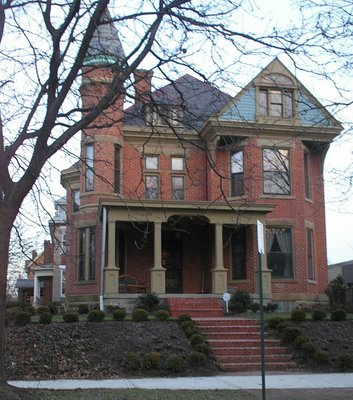
With the end of World War II and the increasing physical mobility brought by improved infrastructure and affordable personal vehicles, the decline of the central business district (CBD) began. A story told a hundred times, the development of suburbia created a donut pattern in many cities – a hollow core with a fat outer ring. Needless to say, affluent urbanites left the city’s dense center for more spacious lawns and larger homes in Bexley, Upper Arlington, and Worthington by the 1940s. Without jumping into a comprehensive history, the phenomenon of white flight left the city’s formerly grand streets (Town, Rich, Broad, Bryden, Neil, etc.) blighted and fragmented. Landlords created multi-family units and neglected properties for decades.
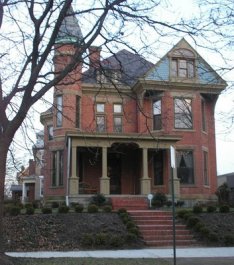
The 1960s (roughly) brought a wave of urban renewal policies that advocated for “slum clearance” and the restoration of the city core. Now on to the relevance of this snooze-fest: while perusing the Columbus city code online, I noticed a section titled “Urban Homesteading Program.” In the CRP class, we learned about urban homesteading as a precursor to textbook gentrification. The municipality offers incentives to people who purchase homes in select neighborhoods and require that they bring the property up to code within a specified time period. The policy also states that the new owner can only own one residential property, and the owner must occupy the residence. The city might waive a lien or give a tax abatement to the new owner for their efforts at getting the property up to code. Columbus’ history with this type of “urban renewal” is rich.
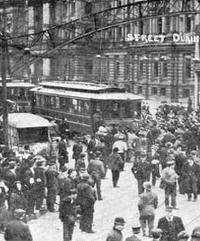
Streetcars fueld expansion of residential areas to Clintonville

The Short North, again, is a textbook example. Grand Victorian and Queen Anne homes were selling for under $100,000 in the early 1980s. Today, Victorian Village is one of Columbus’ most desirable neighborhoods, with home prices well over $600,000 in The Circles neighborhood and on Neil Ave.

Back on point, the Columbus city code’s “Urban Homesteading Program” section (3523) was repealed in 2009. The language of the code was not available on the website for the city code (municode.com) and the only information listed was the word “repealed.” Of course I wanted to find out what Columbus’ version of this policy was, so I called the general city code phone number for Columbus. I should have known when I dialed “311” that it wouldn’t be the contact I was looking for. The person on the other end asked me for a zip code. I gave our office zip code, and then was transferred to the code officer for the district. I explained that I wasn’t reporting a code violation, but trying to get a hold of a part of the code that was repealed and not listed online. The code officer was supremely confused and kept asking me what violation I was attempting to report. Finally he mentioned the City Attorney’s office, so I ended up calling over there.

The woman who answered my phone call at the City Attorney’s office walked me through the steps to access the city code online and discovered that the code in fact said “repealed,” with no further information. I was referred to City Council and gave them a ring to explain my research request. Again, the contact was trying to explain that the code is accessible through municode.com (really?) and that I should check online. I got through to someone else who put me through to someone else who finally understood (or so I thought) what I was looking for. I told them I’d be in that afternoon to take a look at the code which they told me they had pulled for me and would keep at the front desk until my arrival.

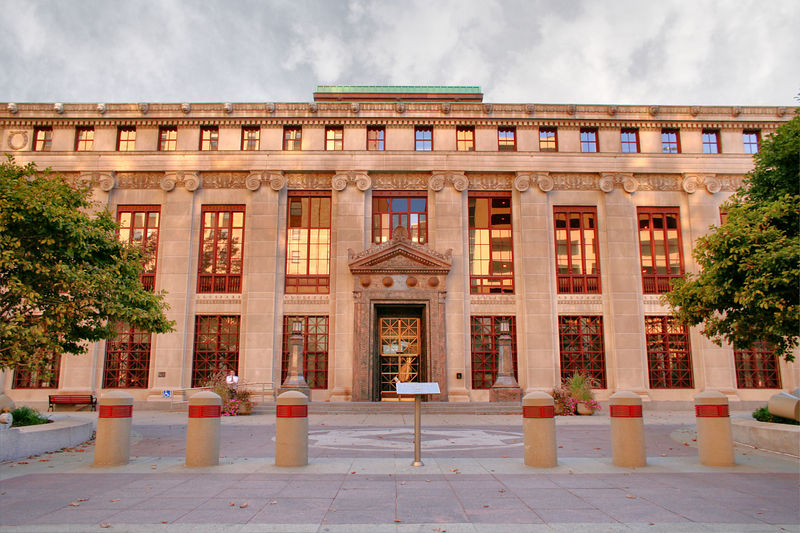
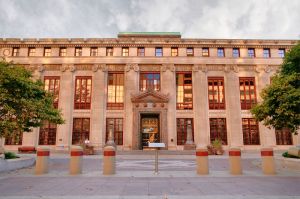
Arriving at City Hall was akin to entering Fort Knox. I was interrogated by a firm security woman in the lobby of the Beaux Arts building on Front St. and after nervously explaining my intent for entering a municipal office, was granted access and even given my own ID badge to paste proudly on my breast. I went upstairs, walked down a long marble hallway, and entered the City Council office. I was greeted with a smile and directed to an open binder on the counter. I looked down. The page below my eyes contained these words: “Section 3523, Urban Homesteading Program. Repealed.”

Yes.

Luckily, a competent woman came to my rescue. She asked me to catch her up to speed on my request, and she diligently set to work finding my highly desired research request. After standing for a bit, she told me that her supervisor said, “We’re not going to be able to get this while he’s standing there, it’s going to take some time.” So, with dual-natured smile, I exited City Hall (after getting lost in the labyrinthine corridors) into the blustery downtown streets. I immediately called Erin (my co-worker) to voice the hilarity of the entire situation.
Monday rolled around and I was on a quest. I had a voicemail from the City Clerk’s office asking me to call back and talk about my request. When I called, a new person answered. Finally, the real deal. He completely understood my request and said he had the language ready for me down at the office. He told me he would fax it (their scanner was broken). I gave him a fax number and he faxed it within 10 minutes. I opened the fax, which is a confusing modern fax mechanism that converts the document to a .tiff file and emails it to the recipient, and page 1 and 4 showed up clean and clear. Pages 2 and 3, however, were put through the perils of a digital scrambler of some kind, appearing only as a series of Tetris-tic black and white rectangles. Embarrassingly, I called him back and asked him to fax it to our old fax number, which is a bumbling traditional fax machine. Nothing came through for 2 hours. I called him back and he said it just kept ringing and ringing. After asking around the office, I found out that the traditional fax is…”temperamental.” I told him I’d come down to pick up the information. The trip downtown was more than worth it—after days of seeking, I finally got to read the fruits of my labor. This time, the information was actually there. They had it stapled and everything, even with a pretty pink post-it with “Mathew Adair” [sic] written on it. Siiiiiiiiiiiiiiigh.

Now I have a repealed section of city code that applies extremely tangentially to my work here at Habitat.

2 Comments

Just getting started…

My name is Susan Snyder, and I will be working with the Franklin Park Conservatory this summer as a summer fellow. Initially, I wasn’t sure what to expect from this opportunity; it sounded exciting, but was also very different from anything I had done before. As a social work student, I have been involved with numerous non-profit organizations. Although each past experience has been valuable in a different way, none have ever presented me with the opportunity to work full-time on my own projects and assignments. By funding the summer fellowship program, the Columbus Foundation has really done something special for both the Columbus community and students alike. This program has not only allowed students to gain valuable work experience in the non-profit sector, but has also allowed non-profit organizations to get the much-needed help they may not have otherwise had. I would be lying if I said that the prospect of this newfound responsibility was not a little frightening, but along with this uncertainty came a feeling of exhilaration and excitement.

My official title at the Franklin Park Conservatory is “Education Intern”, although I seem to be doing a bit of everything. Prior to my start here, I had never really thought of the Conservatory as a non-profit organization. I always thought of the Conservatory as more of a venue or an attraction, especially since my sister had gotten married here. As I came to find out, the Conservatory actually offers a wide range of services and programs for the public, along with serving as a center for community growth. Everything from cooking classes to summer camps can be found here; you can even rent your own plot for gardening! The Conservatory is located inside the Franklin Park, which is an 88-acre plot of land that is open to the public on a daily basis. Although entrance to the main building requires a small fee, most of the outdoor gardens and attractions are free. Some of my main responsibilities include co-leading and assisting in several week-long camps, putting together events for the upcoming Hungry Planet exhibition in the fall, conducting facility tours, and working with other organizations in the community to develop nutrition and wellness curriculum.

My first two weeks at the Conservatory consisted mainly of camp assisting, which has allowed me to get acquainted with both the Conservatory staff and campus. Everyone has been incredibly welcoming, and I already feel like I have worked here for years. Working in the camps has been really refreshing, and has made me realize that many of us do not spend enough time outside. It has become incredibly easy to get caught up in the technological tidal wave that has swept over today’s society, and it is not often that you see people enjoying their natural surroundings. All of the camps offered at the Conservatory are nature-based, focus on active living,  and explore the bugs, plants, flowers, and wildlife that resides alongside us humans in the Columbus community. Another focus of the camps is recycling, which is of utmost importance given the rapid depletion of natural resources in recent years. Encouraging youth to develop an interest in these things from an early age not only positively reinforces healthy living, but contributes to the overall wellbeing of the enviroment and the community.

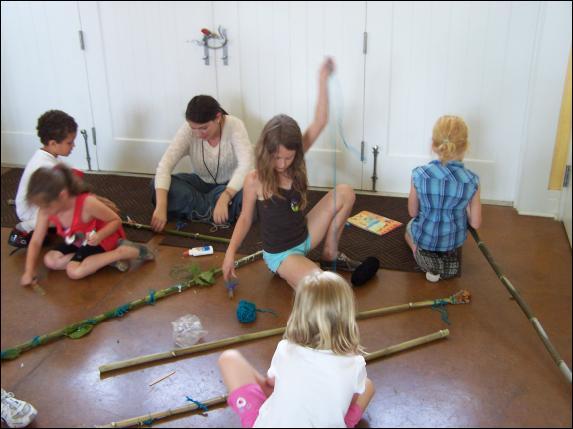
Preparing our walking sticks for hiking

Not only are these camps educational for the kids, but they present valuable topics in a fun and active way. It is easy to tell someone about something and have them hear you, but it is not as easy to actually get them to be interested in what is being said. By offering hands-on activities and creative freedom, the kids get an experience that they truly enjoy. Of course, there is always a little room to be silly…

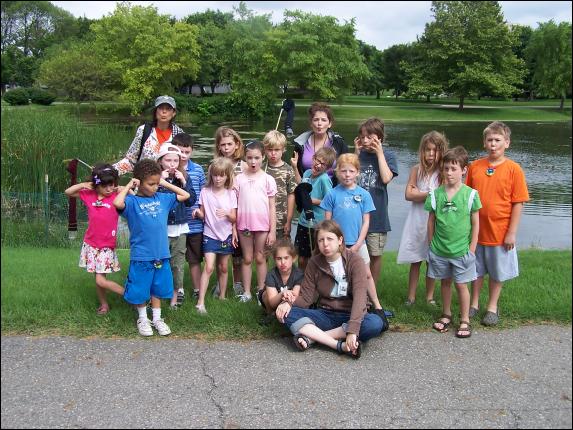
Making our best fishy faces before exploring the lower lake!

Overall, I would consider my experience thus far as extremely positive. I have never been one that favored spending the entire day sitting at a desk, and this job seems to offer the opportunity to do something different every day. I look forward to beginning my side projects, along with continuing my involvement in the summer camps.

On a side note: If you ever looking for something to do on the weekends or in the evening time with your kids, significant other, or friends, you should really check out some of the cooking classes Franklin Park Conservatory offers! Times, dates, and registration information can be found here.

Thanks for reading!

Susan Snyder, Franklin Park Conservatory

Leave a comment

Week of Designing

It has been interesting for me to realize that I have a common theme for my activities at Tech Corps. Last week the common theme was about Designing.

After getting approval from the Tech Corps National Director for my marketing plan, I started the implementation phase of my project last week. The first part of this was designing a Brand Identity for Tech Corps. What is a Brand Identity? A simple explanation is everything associated with that brand (i.e. a corporate name) in its customer’s mind. An example of a strong branding identity is Coca Cola. As a consumer you remember this brand when you see its font or its color. Why is brand identity so critical? A strong brand identity can position a company above its competition. Brand identity is the reason customers choose one brand over another.

But having a brand that is strong takes time, money and effort to develop. For TECH CORPS, I consolidated all of its visual communication features, from its corporate logo (Tech Corps) to its products/programs logos (Techie Camp, Techie Club, Camp IT, Student Tech Corps), from its basic fonts to its identical colors. Using these branding features, I created a design for other Tech Corps communication materials such as letterhead (and footer), slides, table clothes, etc.  The designing process was so fun! I played with all designing techniques and tried different design settings. I will present my design proposal early this week and I am looking forward to hearing the feedback. .

Additionally, I visited a Techie Camp at the Wellington School. This camp was for middle school students grades 6th to 8th. They learned about programming. Using Alice 2.2 and Story Telling Alice they learned how to create animation stories and video games. I observed them playing with their characters, encouraged them to try different design functions and had fun with their learning. It was amazing to watch them demonstrating their final products after just one week of learning! (http://www.youtube.com/user/techcorpsohio#p/a/u/0/QWd-gDu9vNs).

There ends my second week at The Columbus Foundation Summer Fellowship program. The fun has not ended, though! More learning is expected in the coming weeks! I am getting the best and most out of my summer intern experience.

Ha Dang

Leave a comment

It’s all about Collaboration

Week 2 has definitely been about collaboration. On Tuesday, the Columbus Speech and Hearing Center held its 4th annual Great Communicators Golf Classic at the Kinsale Golf & Fitness Club in Powell. This fabulous fundraiser helped raise money for services and programs offered by the CSHC.

As a volunteer, I was placed at hole #8 which held the closest to the pin challenge. Coming from a person who didn’t know a thing about golf, I actually had a blast!! The golfers were full of energy and ready to have a good time. It was a great learning experience and with a little collaboration, we were all able to support a good cause while also having a little fun! Check out the pics and see for yourself!

Now, to the good stuff…for my project, I am focusing on recreating / updating the volunteer orientation process at the CSHC. The center offers many sessions for children and teens that are in need of speech and occupational therapy. The sessions can have anywhere between two to a dozen children in them at a time. Because of this, volunteers are much needed to assist clinicians in the sessions. So, we are working on a way to create the optimal experience for the volunteers, clinicians, and the children who are in the sessions. There are specific techniques the clinicians use to help the children learn and it is important that volunteers understand what role they play in that process.

I’ve been collecting great feedback from volunteers, clinicians, and parents. I will be sending out formal surveys to get more specific feedback and continue to tweak my ideas to create the optimal experience for all parties involved. But I can tell you now that it involves video, PowerPoint presentations, and lots of fun!!

I have an “ideal” timeline laid out for the progress of my project but I look forward to seeing how it actually pans out, lol…wish me luck and I’ll see you next week!

Leave a comment

“If this is numbing your mind…”

My days at Habitat are essentially filled with research. However, I’m spitting our reports on issues and institutions that I find fascinating, so it doesn’t feel much like work. My boss, Michelle, has been so wonderful to allow me to pursue my interests that lie within the scope of Habitat’s work but may not be aligned exactly with my tasks. For example, I’ve been researching Columbus’ rich history with urban renewal and gentrification. We have prime exhibits of neighborhood revitalization in Old Town East, Victorian Village, Italian Village, and most recently Weinland Park. I have had the pleasure of meeting and speaking with Michael Wilkos of The Columbus Foundation about his work in Weinland Park and the history of the successful community development partnerships with various regional entities since the 1990s. He truly is a wealth of information.

Right now Michelle and I are forging relationships with community members in the Milo-Grogan neighborhood and orchestrating community meetings that are slated for July. These meetings are the vital preliminary stages of the Neighborhood Revitalization Initiative (NRI) that will dictate the future of the program in Milo-Grogan. As stipulated by NRI, Habitat-Greater Columbus will take a minimal role in the decision-making process of the community. The initiative is to be community-driven, organically grown from residents and associations that live and operate within the neighborhood.

My co-workers are especially enchanting. It seems as though my questions never cease. For example, I spoke with Melissa for about 45 minutes about HUD policies and mortgage procedures while standing in her doorway. Everyone has been extremely inviting and engaging with me throughout these first two weeks. I only look ahead with motivation and anticipation as the task slowly comes together day by day. We have lots and lots of work to do, many surveys to complete, many conversations to have.

Milo Arts, a residential art studio space on E. 3rd Ave.

Leave a comment

The birds and the bees.

 Hello again fellows and friends! What has the planet done for you today? As I briefly mentioned in my last post, the focus of the upcoming EcoSummit 2012 is ecosystem services. Often confused with natural resources, ecosystem services are somewhat difficult to define and even harder to truly understand. Unlike natural resources they are generally not comprised of things that can be extracted from the earth and converted into fuel, currency or anything else that we humans dig into the earth for. Ecosystem services provide life sustaining benefits. Some examples are the natural pest control provided by birds, bats and larger insects which keep insect populations in check and prevent the spread of diseases, the natural water filtration and flood prevention provided by wetlands, and the pollination of plants and flowers by bees and hummingbirds. The ecosystem services are vital in maintaining the delicate balance our planet needs to function properly, yet unsurprisingly they are being rapidly depleted, largely through human activity. Our bees are dying off, our wetlands are being drained and built over (Ohio has lost approximately 90% of its wetlands) and our rainforests are being razed. According to the Millennium Ecosystem Assessment (the world’s largest audit on the conditions and trends in the planet’s ecosystems) our ecosystems have declined more rapidly over the past fifty years than in the history of mankind.

So what do we do? Unfortunately there’s not a particularly easy solution (at least not that I’ve come across so far in my research but I’ll be sure to keep you posted). There are a number of organizations working to renew and restore the ecosystem services that have been lost, but as you might imagine it’s far easier to destroy a rainforest than it is to build a new one. EcoSummit 2012 will attempt to directly respond to these problems by bringing together great and powerful minds, captains of industry and world leaders so that they might unite in finding solutions to our planet’s most pressing issues. As human beings (particularly those of us living in developed nations) we far too often take for granted that the basic necessities of life will always be provided for us; clean water, fresh air, regular food supplies, etc. Unfortunately our addiction to mass consumption is rapidly destroying the ecosystem services which ensure the creation and sustaining of that which we truly need to survive.

If you would like to learn more about ecosystem services and the Millennium Ecosystem Assessment I highly recommend looking on their website at http://www.maweb.org/en/index.aspx. I’ll continue discussing what ecosystem services are, who should care about them and what is already being done to help on this blog as I learn more.

Bailey-Mid-Ohio Regional Planning Commission

Tagged , , , | Leave a comment