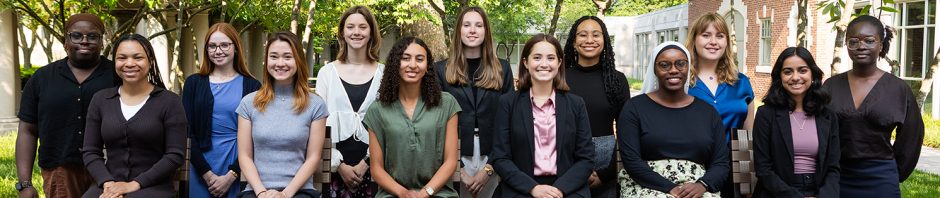
Week Five at MY Project USA

This week was a time for My Project USA to reflect on the successful session that we had over the last four weeks. We are very proud of the students for their insight into what they want in their community and the diverse community they created. The students served as educators, teaching us how to be servant leaders in their community. I am proud of the students we worked with, and I hope they are going to join us for the second session. In that particular session, we will be cultivating a mural for our project-based learning activity. This will be a four-week activity that will also be presented to people at MY Project USA. We will also use Khan Academy and have a Technology class where students will be learning how to code and use drones. The mural will be based on what the students see in their community and what they want to see in the future. We are excited to have new and returning students experience our summer program.

As I continue working at MY Project USA I also had to reflect on my experience with this fellowship. This is the most challenging fellowship that I have experienced. I am having a wonderful experience thus far because of the team that I work with and the opportunities that are given to me. I have had positive feedback from the directors that helped me understand my strengths and weaknesses. When reflecting on my own, I knew that there were a few areas that I was good at while I needed to improve in others. I am adaptable at my job, which is a skill you need at any nonprofit. There were times that I needed to improvise so that everyone could get what they needed to be done. I also am an analytical person that was able to plan under time constraints so that we could operate smoothly.

As a fellow, I notice that this organization created a team that works hard so that things can run smoothly. We all contribute to the organization so that the ultimate goal can be met. We want to be effective in the West side community one family at a time. I have enjoyed this experience and I am excited to see how successful the next session will be. My Project USA has influenced my life over the past five weeks. I have learned the art of patience and networking to create new opportunities for the community.

Leave a comment

Week 5: The Halfway Point

It’s hard to believe that I am already halfway done with the summer fellowship! Following the timeline I formulated during my first week at Local Matters, I planned to begin drafting the operations manual in greater detail by this point. I have stuck to this timeline even with the numerous obstacles in my personal life—namely, a covid infection. 

Last week, I created a survey to send out to the members of my team to gain further insight into my site’s operations. The survey sought to gather both quantitative and qualitative data. I inquired about the training and onboarding experience, how often employees find themselves confused, processes regarding technology, and allowed respondents to share their suggestions on how to improve the organization. Within minutes of sending the survey out this week, I received numerous helpful responses. As I read through these responses, I decided to first focus on those concerning the training and onboarding experience. 

Because I majored in political science and public management, I feared that my skills would not transfer easily to the nonprofit sector. Analyzing the survey responses showed me that this was not the case. Later this week, I compiled a memo to be shared with the leadership at my host site outlining the information gathered on the training and onboarding process and presenting recommendations for improving the process. The memo was structured similarly to the countless memos I wrote in undergrad analyzing public policy problems. Getting to use the skills I acquired through my studies and apply them to the workplace setting felt exciting and rewarding. 

Reflecting on the fellowship at the halfway point, I have enjoyed my experience greatly. Working in a new environment has pushed me to better understand what my skills are and how I can use them in a variety of workplaces. I have also developed a greater understanding of nonprofit organizations and how they operate. Seeing the passion for helping the community access healthy food exuded by everyone at Local Matters has reignited my interest in the field. I look forward to seeing what the next half of the fellowship brings!

Leave a comment

Week Five – Humanities around Ohio

This week presented a very different pace than any of the previous weeks, given that the only two full workdays for us were Tuesday and Wednesday. On these days, I finished up making thank you phone calls to past donors of Ohio Humanities in an act of stewardship, which is incredibly important for fundraising. I’ve learned very effectively during this fellowship that making donors feel valued as a result of the gifts they’ve given an organization, whether that be by a thank you, sharing the work that has resulted from the funds they’ve given, or inviting them to take part directly in events of the organization. I had the opportunity on Wednesday to attend a grant meeting, in which grant applications are reviewed by the team to determine whether the project of the applying organization will receive the grant based on the guidelines of Ohio Humanities grant application. Seeing how this process takes place will be incredibly valuable for me at a future nonprofit organization whether I’m on the grant making or grant writing side.

On Thursday, I got to travel with Rebecca, the Executive Director, and Kiley, the Communications Manager, to Portsmouth, Ohio for a cheque presentation at the Southern Ohio Museum and Cultural Center. Checks for grants that were recently given by Ohio Humanities to this museum, Scioto Literary, and Shawnee State University for either COVID relief or project funding were presented, which was also in an act of stewardship toward this specific area of Appalachian Ohio so that our organization can ideally obtain state funding for the first time and build capacity, as opposed to just federal funding.

Lastly, yesterday (Friday, July 8th) was the Over-the-Rhine Film Festival in Cincinnati! We have been finishing up preparations for it this week, and I think that the collective efforts of the team, the volunteers at the festival, and the festival staff led for a very fun and smooth-running event, which I am very happy for. The theme of the pre-party was “A Celebration of Ohio Storytellers,” which I think was effective in its goal as we got to witness the powerful words of the poets of Triiibe Collective and Rimel Kamran, whose impactful poem earned her the title of the first Youth Poet Laureate of Cincinnati. After the party, Dr. Lomax’ film called 400: An Afrikan Epic was showcased, which told the story of the experience of Black Americans through the power of music and its effect on listeners to spark an emotional reaction and build connections with others. I am so grateful I got to hear these stories last night and see the mission of Ohio Humanities being fulfilled first-hand as well as for being a part of the planning process that resulted in an amazing event.

Leave a comment

Week 5: Blog Posting and Core Conversations

This week at the Ohio History Connection was a peaceful one with no facilitations scheduled with summer programs. Instead, I got the pleasure of working closely with my department (School & Teacher Support) on their summer projects, specifically their blog and Core Conversations lesson plans.

The Education department’s blog posts consist of different lessons and activities that are presented to other teachers and parents looking for ideas within their classroom. There has been a multitude of blog subjects, including tips for creating conversations about current events and the importance of advocacy through outwork in today’s society. My favorite posts shared the goal of shedding light on Ohio’s minority history, but also explored the importance of minorities to the United States. Some of the posts were very simple, but others were complex and informative. Seeing these resources available for our teachers and families not only excited me, it opened up my eyes to all the possibilities for obtaining knowledge within my city. Even when my internship at the Ohio History Connection ends, I’ll still be able to learn from them and their expertise on education and our city’s background.

My first blog post centered around object-based learning activities and different ways to implement them in the classroom. Since my facilitations are not usually within a traditional classroom, I explained some of the activities that could be done based on certain items. I created activity outlines for each activity, detailing each step for the activity as well as possible materials and questions for the students. This was my first time creating such an in-depth sketch of activity, so it was slightly out of my comfort zone. Initially, it was difficult to transfer much of my activity process into an outline without being too in-depth or vague. On the other hand, I was pushed to develop a more meticulous outlook when developing an outline that others have the opportunity to recreate. In the end, I put together a decent first post with the help of my editors – not to mention the weeks of practice I had writing for this bog, of course.

My other assignment consisted of developing a lesson activity for the Ohio History Connection’s social studies curriculum, Ohio as America. This educational program includes an area called “Core Conversations” where important aspects of American history are elaborated upon. I worked on the Foreign Relations Core Conversations, an activity expanding on the complicated chronology of U.S. Foreign Policy. This was my sweet spot, so to speak. Not only did I get the chance to research and propose different educational resources for the activity, but I also got the opportunity to create follow-up questions based on the historical sources. This was unlike the other lessons I’ve created before which were solely either centered around the students or teachers (for the students). Instead, these kinds of activities have resources and questions that can be explored by students, teachers, and their families!

All in all, this week was one of my favorites. Working so closely with my colleagues was very fulfilling, as well as implementing my knowledge into the programs. I can’t wait to see how my projects develop throughout the weeks to come!

Tagged , , | Leave a comment

Week 5 | CIS Summer Camp

This week was a festive and fun filled week of events. This is the third week of the camp and the students have shown so much growth in their motivation to wanting to be a camper . The relationships and trust from student to camp counselor have grown as well. Throughout the week, the students learned and participated in various activities that allowed them to step out of their comfort zone. On Tuesday, July 5th we took the students to Big Bounce which was one of their first field trips. It was good to see the interaction they had outside of the camp. During the field trip, we played dodgeball and jumped around.

The next day on Wednesday , July 6, we had a friendly competition of games. There were about 8-10 games and 2 games going on at the same time. Some of the games included 1 on 1 basketball, Cup Flip – Tic Tac Toe, Soccer Goaly, hula hoop and much more. The games kept each student excited and on their toes due to everything being fast paced and each camper going more than once.

The student really enjoyed the field trip activities that we took them on. They were able to network with other students outside of Camp CCA and build those meaningful connections with one another. I saw students venturing out and getting to know other camp students and further opening up to the counselors.

Leave a comment

Week 5 with Speak!

I spent most of this week working in the Google Drive and the Speak! for the Unspoken volunteer page on Facebook. While looking at our results from the survey we sent out a few weeks ago, we decided we should try to reach more of our Volunteer base, which meant a lot of contact searching for me. So, that is exactly what I started doing. I was able to create a list of recent volunteers who had not completed the survey, and this list will serve as my starting point for volunteer interviews. With the recent holiday, it gave little time this week for volunteer interviews, so that is something that will continue next week. Speak! for the Unspoken actually had an intake on the 4th of July, and some awesome volunteers are what made it happen!

I also have spent time over the past few weeks revamping the application process for their different volunteer positions, as well as their adoption application. I have a few more interviews scheduled for this, but after those meetings I will be working on creating all of the new applications. So far I have completed the new volunteer application and just need to learn a bit more about the fostering process as well as the adoption process. I have those meetings scheduled for early next week, so the goal is to get those new forms created by this time next week! I also plan to learn more about our intake process, and hopefully attend another intake soon.

Next week I plan to have the volunteer surveying results completed and to be moving on to the planning stage for changes and whatnot. It is very exciting to be at this point in the process, as I love to “DO” so the waiting period was not my favorite. I also enjoy creating forms and documents to help better organize information, so this is the part of the fellowship I have been looking forward to most! I am also looking forward to an event that Speak! is having in the next few weeks so stay tuned for details! 🙂

Leave a comment

Cultivate Week 5

Let’s play a game. It is called “The Leader Game” and it comes from the Authentic Relating Games Manual. I did this on Wednesday with the youth that are enrolled in Cultivate’s summer garden program. One person is designated the leader and like all good leaders, they get to take a seat on an elevated chair. The leader in this game gets to take control of the space for “x” (we did two) amount of minutes. During this time, the leader will have the freedom to engage in power dynamics, authority, requests, rules, or create whatever context they want in whatever way they want. The first person to start tried to be a queen who demanded that others fan and feed her. She quickly realized that just because you tell someone what to do doesn’t mean that the person is going to do what you say. I am not about to get up and feed this kid, I thought, so I negotiated instead. “I ain’t doing all that. There are some pretzels here though. Would you like me to give you a pretzel?” I gave her a pretzel. Then I watched the other participant in the program and our fill in facilitator do what she commanded of them. The next girl took a turn but she is shy and introverted. She took a little extra time to figure out what she wanted to do. She was not used to being a “leader” and felt awkward being the one to come up with the scenario or rules. Eventually, she decided that the other girl should cook her dinner. There was a play kitchen and pizza was cooked and served. The other girl even cleaned the dishes for this new leader. She quickly realized I wasn’t going to participate through demands so kept the interaction between her and the other girl. Next, the co-facilitator took her turn. She has kids and is used to making demands of them and went an unexpected route. She acted like a drill sergeant and had us exercising. Actually, I refused to participate. I don’t like people speaking to me this way, even in a play context. Lastly, it was my turn. I told everyone that I was going to take this time to tend to my body and do some stretching. “Everyone is welcome to follow my lead but ultimately, I don’t care what you do.” Everyone followed and I taught them some stretches they have never attempted. After our game ended we discussed what it felt like to play this game. We discussed different types of leaders and the differences between power with and power over. We learned a few things about ourselves. The co-facilitator expressed that being a mom, they sometimes overcompensate for something when they use authoritative rule. It usually leads to building resentment. We also learned that things feel fairer when we make decisions together through negotiation. And some of us turn to auto-pilot sometimes, simply following our leader just because they have been designated leader.

PS, The Milo-Grogan Green Space volunteer night is on Thursdays from 6-8PM. Anyone is welcome to do some weeding, mow the lawn, etc.

Leave a comment

Week 5: The Growth of the Sustainable Business Directory

It is hard to believe that we are approaching the end of week 5 already! I am continuing the growth of the Sustainable Business Directory with 425 businesses currently in the database. As I mentioned in last week’s blog, I forgot to cross reference businesses that are members of the Columbus Greenspot Program. Through the good relationship between Simply Living and Greenspot, I have my hands on a spreadsheet that contains all the current Greenspot business members. What I decided to do to cross reference these businesses was give them a tag that says “Greenspot Business Member” which is essentially a key phrase that can be searched in the search bar. All of the businesses that have that tag are pulled up once searched. This hiccup was easily fixed thanks to the strong relationship between Simply Living and Greenspot. 

Earlier this week, I met with a few Simply Living board members and employees to discuss the Sustainable Business Directory. The board members wanted to learn more about the directory and asked questions. The goal of the meeting was to improve the functionality of the website. The meeting went incredibly well and I was encouraged to give my thoughts to ensure that the directory will be successful and pertinent. After discussing and hearing from everyone in the meeting, we ended with two takeaways. First, it is important that Greenspot business members get sufficient recognition in the directory. A tag is great for those that are aware of Greenspot and what they do. But there also needs to be some visual aid on the web page of members. Meaning, once someone clicks on Pistacia Vera’s page in the directory, for example, there must be a “Greenspot Business Member” badge displayed. Secondly, we should email every business in the directory once the website is launched to indicate their inclusion in the Sustainable Business Directory. Thanks to the website software, there is a tool which allows us to export all of the information of each business into a separate spreadsheet.

The Sustainable Business Directory is not only important for our local economy and environment, but also the future of Simply Living. This directory will help us build relationships with local businesses in the community and encourage them to become members of Simply Living.         

Leave a comment

Week 5: Research & Learning

It’s crazy to think that this summer experience is already halfway done! Time flew by, but when I look back on everything that’s happened so far, it makes sense. It’s been a busy five weeks at ETSS filled with meetings, tons of emails and phone calls, donation requests, fundraisers, and lots of learning!

This week, I heavily focused on donation requests once again. Since the beginning of June, the Advancement team has reached out to over 150 business, with at least 15 in-kind donations already secured. With the list of businesses to contact continually growing, we hope to create our most expansive auction this year!

Focusing on the Evening of Promise, I have been researching kites from all around the world. The theme for this year’s EOP is “Fly Higher Against the Wind.” With that, we hope to decorate the event space with a variety of culturally diverse kites from around the world. It’s interesting to see all of the different shapes, patterns, and materials, while also learning about the various kite festivals in different countries.  

One of the most interesting and informative aspects of my week was attending a Lutheran Immigration and Refugee Service (LIRS) meeting regarding resettlement and the adjustment of status for Afghan parolees. Through this meeting, I learned about a new placement restriction in Northern Virginia that was issued on June 23, 2022 and set to go through September 30, 2022. This placement restriction applies to all refugees, SIVs and Afghan parolees, making the Northern Virginia area temporarily restricted to spouses, parents, children, and grandparents.

Additionally, I learned about general considerations for Afghan parolees, one-year parole status options, asylum & TPS, SIV processing, TRIG exemptions, and the documentation process. In general, it is imperative to know when parole expires, whether it’s in one or two years. One-year parole status options include Temporary Protected Status (TPS), a request of re-parole, and AOS options, including SIV, asylum, and family-based immigration petitions. In regard to the documentation process, common problems often revolve around Employment Authorization Documents (EAD’s) with either inconsistent information across several documents or pending applications with no sign of progress for several months. There are various ways to go about fixing these problems, including filing an expedite request for a pending EAD, applying for a replacement card for lost or non-delivered EAD’s, and contacting United States Citizenship and Immigration Services (USCIS) customer service.

Leave a comment

Interview Observations

We have reached the end of the 5th week in this 10-week internship and while I’m on track for some tasks, I have a long way to go for others. I have really immersed myself in my work for the best practices report. Interviewing partners and discussing these interviews with my supervisor afterward is always the highlight of my day. These interactions have taught me so much thus far. 

An interview I had last week, for example, consisted of 5 organizations located in the same city that all did very similar work. They were programs that received the majority of their referrals from schools. Caseworkers would then meet with the child and their family to see what support is needed. A question that came to mind after this interview was, “Is it better to have multiple organizations working on the same thing, or to combine them into one large organization?”. There is no yes or no answer to this question, nor did I expect one. To me, this question signifies a change in my mindset. Although there are still many terms and acronyms used during interviews that I do not completely understand, I finally have enough of a gauge on my work to think further than, “What is a Mckinney-Vento family? What does ERA mean?”. Each organization has its own strengths and while amalgamation may not be the answer, the goal of this best practices paper is to help programs learn from each other and expand their capacity to serve families. Some organizations work with a high undocumented population so the needs of that program are vastly different from an organization that operates with low-income families living in a high-income area. One focuses more on finding bilingual caseworkers and building trust, while the other is preoccupied with finding affordable housing in that area.

Leave a comment